In Europe, Platform Workers Are Winning Limited Protections
Across Europe, platform workers have won a series of court cases ruling that they are employees, not self-employed. Moves for new EU-wide legislation have faced serious resistance from lobbyists but now look set to deliver some new protections.
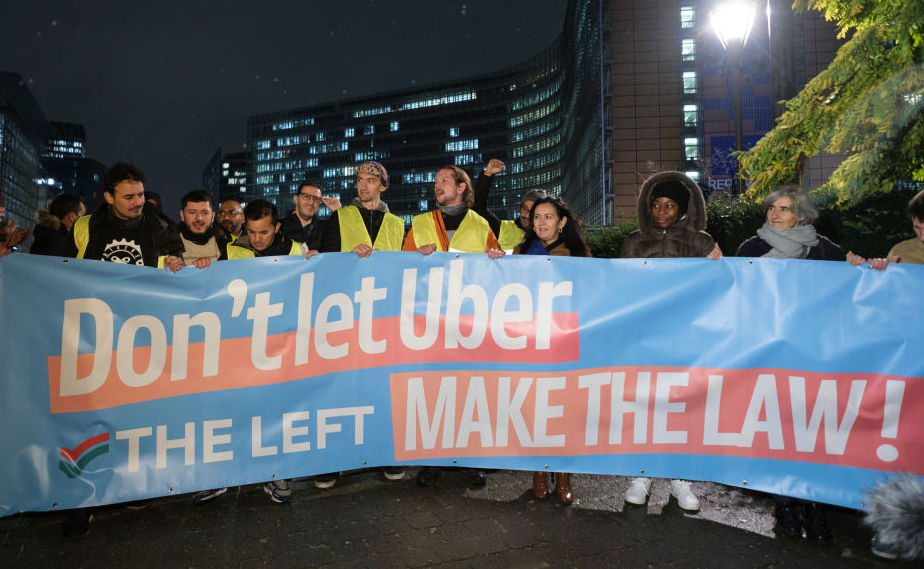
Gig workers demonstrate outside near the European Union headquarters in Brussels, Belgium, on November 8, 2023. (Thierry Monasse / Getty Images)
As the European Parliament heads toward fresh elections in June, there’s one unresolved file on the desk of Brussels’s politicians and technocrats. The European Union (EU) Platform Work Directive, an attempt to establish a unified set of labor standards for workers on digital platforms like Uber and Deliveroo, has turned out to be a thorny issue.
The EU’s various institutions have been banging heads over platform work regulation for years now, unable to bridge conflicting interests and ideologies. If passed, the Platform Work Directive would establish a whole set of new rights relating to algorithmic management. But the dividing line over the directive has centered on whether the EU should consider food-delivery couriers, private-hire drivers and other app-based, on-demand workers to be employees rather than independent contractors.
The stakes are high. Most platforms — almost all of which still register losses, despite investors’ growing demands for financial sustainability — see their business model under threat from reforms that could see their labor costs rising approximately 20–30 percent. The extra bill owes to benefits like sick leave, various tax implications, and the requirement to pay employees for waiting time at work. But for many platform workers hired as if they were self-employed, the cost they have long been paying in terms of poverty pay and job insecurity is itself untenable.