Chile’s New Constitution Will Empower Chilean Workers
- Nicolas Allen
After decades of its dictatorship-era constitution drastically reducing the rights of workers, women, and others, a new constitution is on the way in Chile. The draft paves the way for collective labor rights, public health care, and much more.
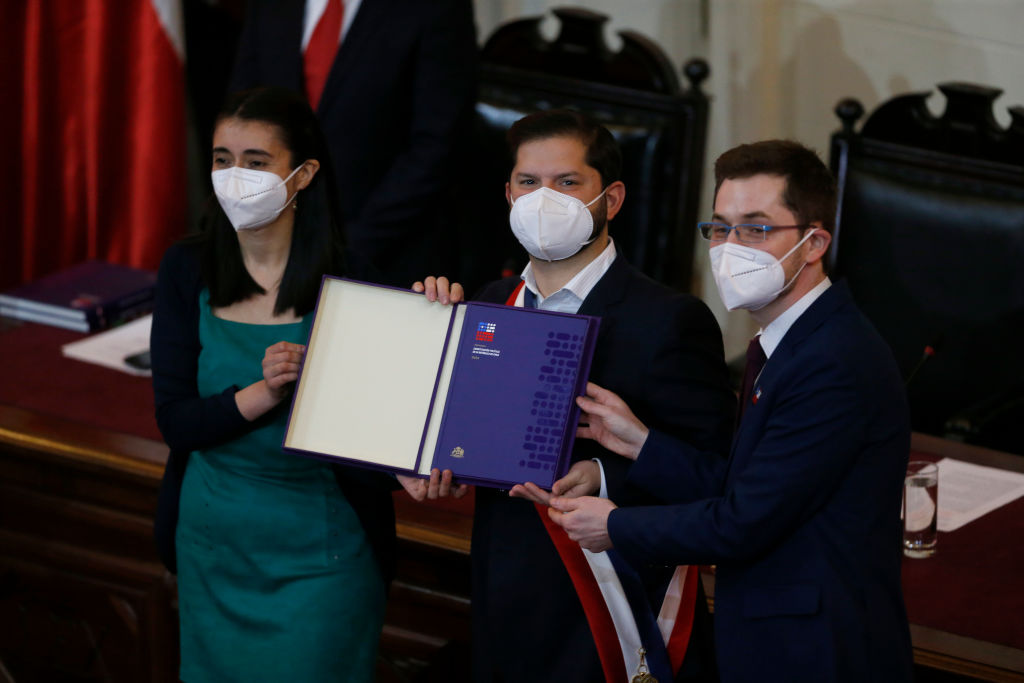
President of Chile Gabriel Boric receives the new constitution draft from the president of the Constitutional Convention, Maria Elisa Quinteros, and Vice President Gaspar Domiguez on July 4, 2022, in Santiago, Chile. (Marcelo Hernandez / Getty Images)
The first step toward a new constitution in Chile is now complete. The draft of the new Magna Carta was officially delivered on May 16, paving the way for major changes in Chilean society, particularly in the areas of social rights, gender parity in political participation, and constitutional recognition of native peoples.
In terms of social rights, the new constitution recognizes demands that have been a banner for popular struggles since Augusto Pinochet’s neoliberal counterrevolution in the 1970s. It guarantees access to health, housing, education, decent pensions, nonsexist education, and the right to abortion, all grouped under the concept of a “social and democratic state” that recognizes itself as plurinational, intercultural, and ecological.
Pablo Abufom of Jacobin Latin America spoke with Karina Nohales about all the changes that can be expected with the new constitution. Nohales, who also serves as Alondra Carrillo’s constituent spokesperson, analyzed the relevance of the newly approved norms, especially those related to labor and labor rights, and explained the challenges that this new constitutional period poses for the plurinational working class of Chile.