The NHS Is Struggling Because of Years of Austerity
Britain’s National Health Service is in crisis, with sky-high and still-rising waiting lists and huge delays in emergency services. It’s the predictable result of over a decade of Tory-imposed austerity.
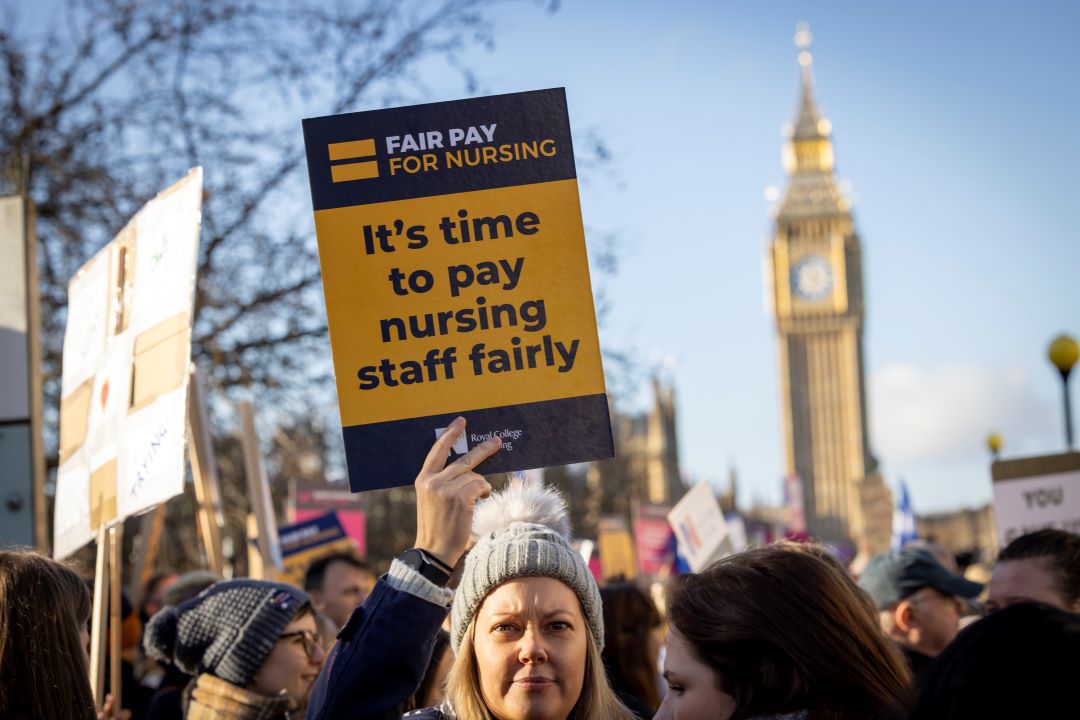
Nurses and supporters striking on a picket line outside Saint Thomas Hospital on December 20, 2022, in London. (Andrew Aitchison / In Pictures via Getty Images)
In ten years from 2000, a decade of sustained investment by a New Labour government managed to repair much of the damage done to the National Health Service (NHS) by twenty-one years of underfunding. Then, in 2010, David Cameron’s government threw that into reverse with a new decade of austerity.
That’s why the performance of England’s NHS is now the worst ever, with sky-high and still-rising waiting lists, huge delays in emergency services, and dwindling numbers of general practitioners (GPs) struggling to deliver increased numbers of appointments. Latest figures show fewer than 100,000 acute beds available and a record 96 percent bed occupancy.
It’s this lack of capacity that is causing desperate delays. In November, 37,837 patients waited more than twelve hours on trolleys in Accident and Emergency (A&E), a thirty-four-fold increase from 1,111 before the pandemic in November 2019 — despite numbers of emergency admissions almost 8 percent lower than 2019.