Canada’s Health Care System Is on Life Support
After decades of cuts, Canada’s public healthcare system is in crisis. The results of austerity are not theoretical — people are dying in Canada’s waiting rooms.
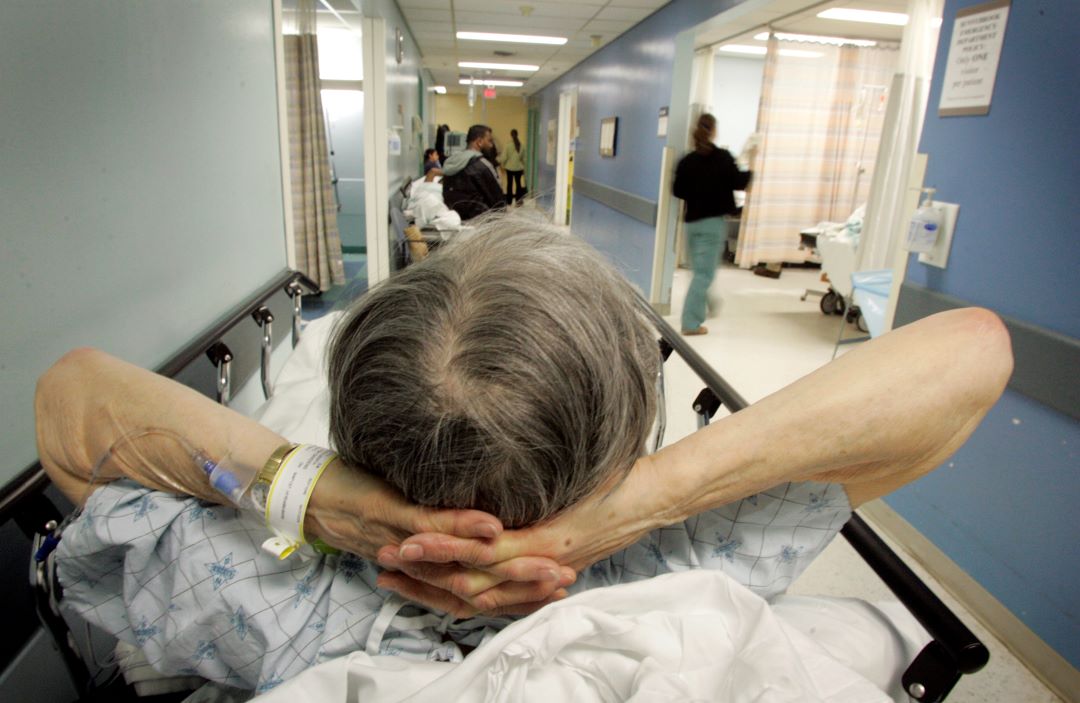
An elderly patient bides her time while waiting on a stretcher in what is known as “The Hallway” inside of the Sunnybrook Hospital Emergency Room in Toronto, Canada, in January 2005. (Peter Power / Toronto Star via Getty Images)
Canada’s hospitals are in crisis. Across the country, its emergency departments (EDs) are overwhelmed, their beds are full, and patients are dying. This past fall, an Angus Reid poll found that 29 percent of adults reported “chronic difficulty” accessing health care. In Ontario, Canada’s largest province, a recent Environics poll shows that 80 percent of respondents believe the province’s health care system is in crisis.
Throughout the country’s health care system, influxes of COVID-19, respiratory syncytial virus (RSV), and influenza patients are overwhelming short-staffed facilities, including children’s hospitals. While much of the news coverage has suggested that the system’s inability to cope is a problem of too many patients in the wake of COVID backlogs, it is actually a recurring problem. A review of the last few decades shows that the country’s emergency departments experience this problem — too many patients and too few beds — nearly every five years.
The problem is not the number of patients. The problem is that decades of austerity measures have left the system threadbare.