Denmark’s Left Has Failed to Make the Green Transition Its Trademark Issue
Denmark’s thriving green energy industry ought to provide the Left with an ideal organizing opportunity. Yet this week’s election showed that it has failed to connect the green transition with a program for jobs and investment.
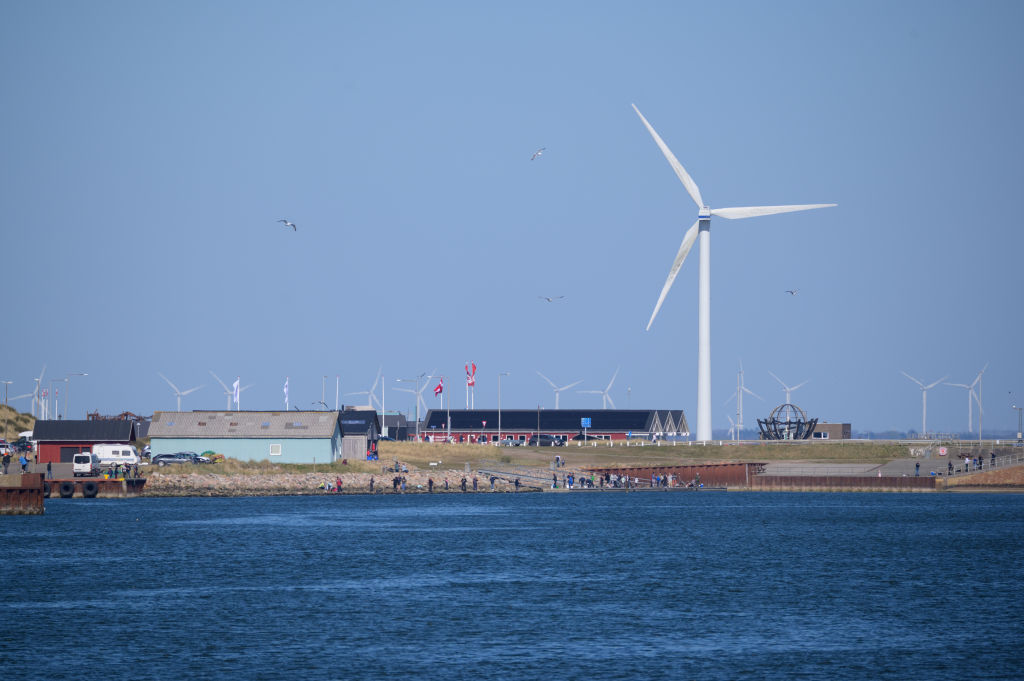
A wind turbine stands against a blue sky near the harbor entrance in Hvide Sande, Denmark, April 21, 2022. (Jonas Walzberg / picture alliance via Getty Images)
Denmark’s election this past Tuesday was held against a backdrop of geopolitical tension and a sense of increasingly dark times ahead. Just days before Social Democratic prime minister Mette Frederiksen called the election, the two pipelines Nord Stream I and II were sabotaged right outside Danish territorial waters. During the election campaign itself, inflation hit 10 percent, the highest figure in four decades. The worsening economic and geopolitical situation naturally affected the mood in the country — and this did not provide optimal conditions for the Left.
Frederiksen has been prime minister since 2019, spearheading a Social Democratic government reliant on a confidence-and-supply agreement with two left-wing forces (the Green Left and Red-Green Alliance) as well as the centrist Social Liberals. Frederiksen’s government collapsed when the Social Liberals withdrew support for the government following the “mink scandal”; during the COVID-19 pandemic, Frederiksen forced the slaughter of mink farmed for fur, as these animals could catch and develop the virus. This order turned out to be illegal, and Frederiksen faced heavy criticism for heavy-handedness and disrespect for the rule of law.
Yet, in the aftermath of Tuesday’s vote, it seems that Frederiksen will continue to govern for another term, despite a fall in support for the center-left bloc as a whole. While the vote for the Social Liberals and the parties to the left of the Social Democrats declined, Frederiksen’s party itself scored 27.5 percent — its best result in twenty years. The Right, as well as the former partners in the Social Liberals, had long focused their criticisms on Frederiksen’s personal leadership style and power grabbing. But the result turned out to strengthen her position.