Quebec Is Trading Social Solidarity for the Politics of Exclusion
As Quebecers head to the polls on Monday, the waning sovereignty movement has lost ground to insular, xenophobic traditionalism. In an increasingly disenfranchised society, an exclusionary Quebec is a sign of fractured federalism.
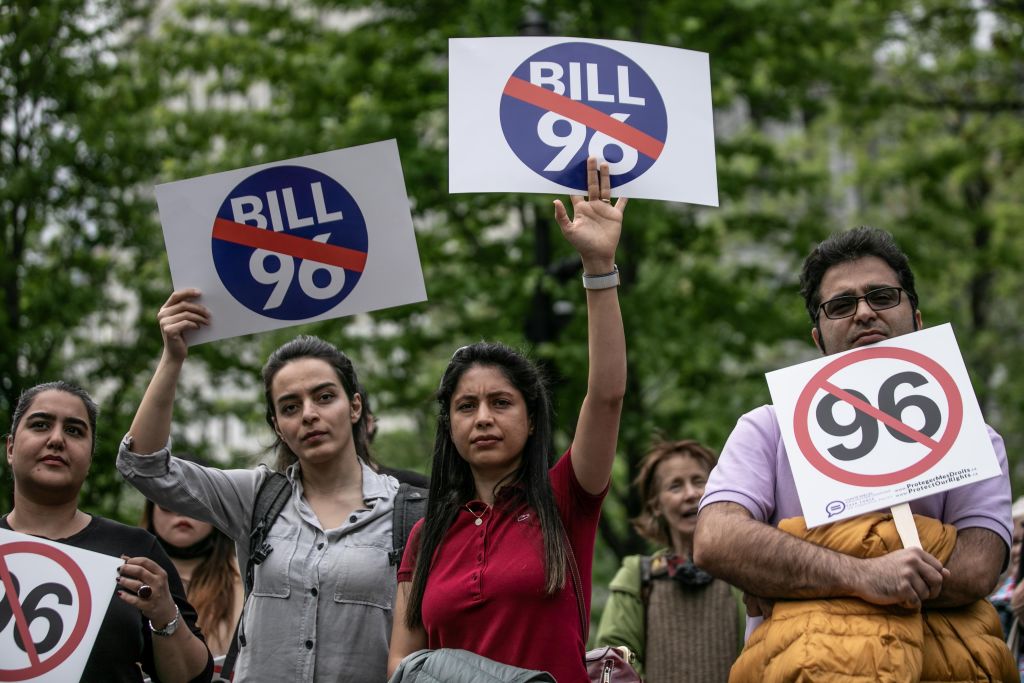
Protesters in Montreal oppose Bill 96, a French-language law that prevents cultural minorities from freely choosing what language to use in postsecondary education, May 26, 2022. (Amru Salahuddien / Anadolu Agency via Getty Images)
There’s a moment in every election cycle when someone makes a statement or off-the-cuff remark that cuts through all the overly rehearsed, carefully choreographed talking points and exposes a reality hidden — or unacknowledged — about a given society.
In Quebec, which is holding a provincial election tomorrow, that moment came during the first debate, when the leaders of two ostensibly left-leaning political parties used the N-word in front of a television audience of about 1.5 million people — to say nothing of Dominique Anglade, the black woman at the helm of the province’s primary opposition party.
The slur was not directed at Anglade, but rather was the result of the leader of the Parti Québécois (PQ), Paul St-Pierre Plamondon, goading the leader of Québec Solidaire, Gabriel Nadeau-Dubois, into stating the name of Pierre Vallières’s 1967 book N — blancs d’Amérique (translated as White N — of America).