New South Wales Public Sector Workers Are Striking Against the Cost-of-Living Crisis
The last month has seen nurses, teachers, railworkers, and other public employees in New South Wales strike for above-inflation wages and improved conditions.
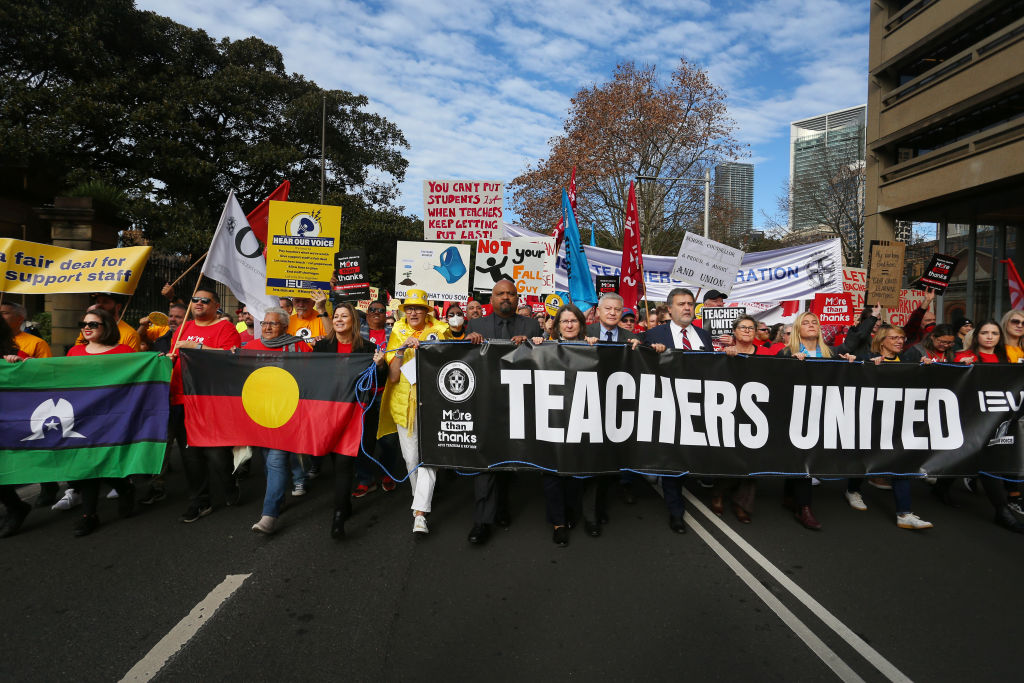
Teachers and supporters demonstrate along Macquarie Street on June 30, 2022, in Sydney, Australia. (Lisa Maree Williams / Getty Images)
Teachers, nurses, midwives, transport workers, and other New South Wales (NSW) public sector workers have been on strike over the last month, demanding adequate wage rises and an end to unsustainable workloads. It’s a welcome revival of industrial militancy after record low strike rates over the last few years. Given the conditions workers are expected to put up with across the country, the strikes could signal the beginning of a broader wave of union struggle.
From the Pandemic to Pay Cuts
Teachers, nurses, midwives, and railworkers have now spent years on the frontlines of the ongoing pandemic. In return for putting their health on the line, the state government is rewarding them with ongoing poor conditions and stagnant wages.
While Reserve Bank Governor Philip Lowe notes that inflation will likely rise to 7 percent, the Liberal Dominic Perrottet government has offered public sector workers a paltry 3 percent pay rise. This would amount to roughly a 3 percent pay cut in real terms — indeed, the real week-to-week cut is higher, given a superannuation increase makes up a portion of this offer. Worse, this offer comes after a measly 2.5 percent rise last year that itself followed a year of frozen wages in 2020 under Perrottet’s predecessor, Gladys Berejiklian.