A Mélenchon Government Would Shake the Foundations of Neoliberalism in Europe
Jean-Luc Mélenchon's left-wing coalition is neck and neck with Emmanuel Macron’s party in polls for today’s French parliamentary elections. The coalition’s victory would shake the neoliberal order in France and across the European Union.
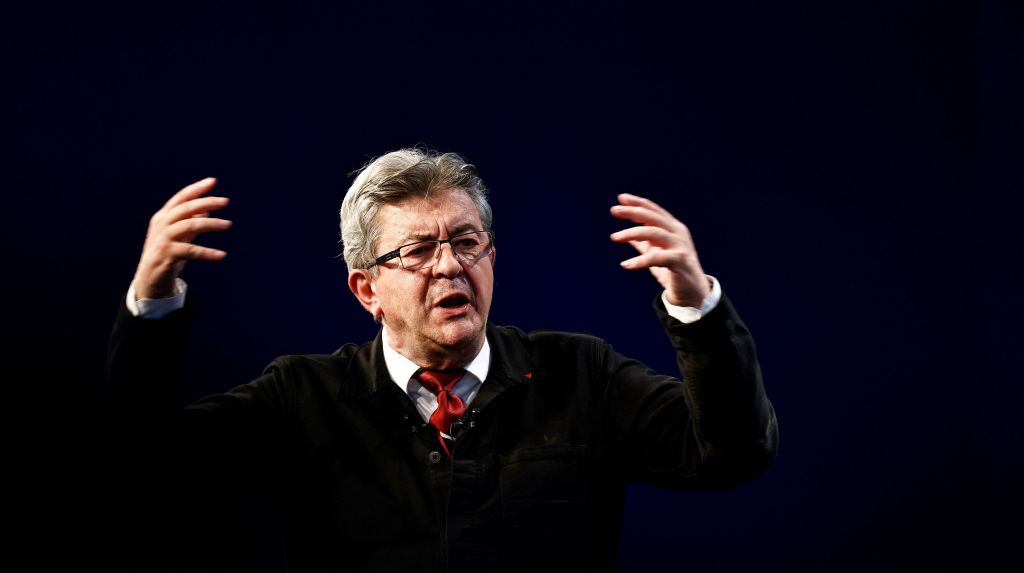
Jean-Luc Mélenchon speaks during a NUPES campaign meeting ahead of the legislative elections, June 8, 2022. (Sameer Al-Doumy / AFP via Getty Images)
For France’s left-wing leader Jean-Luc Mélenchon, today’s parliamentary elections are a “third round” of the presidential election held earlier this spring. Fresh from his 22 percent score in April’s presidential contest, he is hoping that the June 12 and 19 rounds of the legislative elections will hand his allies a majority in parliament — allowing him to become prime minister and defy the neoliberal course set by President Emmanuel Macron. Mélenchon heads into the contest as the linchpin of a broad left coalition, Nouvelle Union populaire écologique et sociale (NUPES), which enjoys a narrow lead in most polls, albeit not in seat projections. The alliance brings the Greens, Socialists, and Communists behind the core planks of his own France Insoumise movement’s program, L’Avenir en commun (The Future in Common), promising a radical transformation of the French economy. Its key rivals are Macron’s recently rebranded Ensemble vehicle and, further behind in polling, the far right, led by Marine Le Pen.
Stefano Palombarini is author, together with Bruno Amable, of The Last Neoliberal, an analysis of how Macron reshaped the French political map in recent years by uniting free-marketeer, pro-EU elements of both the center left and center right. He spoke to Stathis Kouvelakis about the radicalization on the Left, the continuing collapse of the traditional parties, and what change a Mélenchon government could bring to France and Europe.
Stathis Kouvelakis
What does Emmanuel Macron’s victory in the presidential election tell us? Has the “bourgeois bloc” won, and what are the prospects for further neoliberal reforms?
Stefano Palombarini