Belgium Is the EU’s Capital, but Its Own Future Is Now in Doubt
Belgium was a pioneer of industrialization, and class struggle by its workers’ movement created one of Europe’s most impressive welfare states. But with regional divisions now dominating Belgian politics, the country’s long-term survival is deeply uncertain.
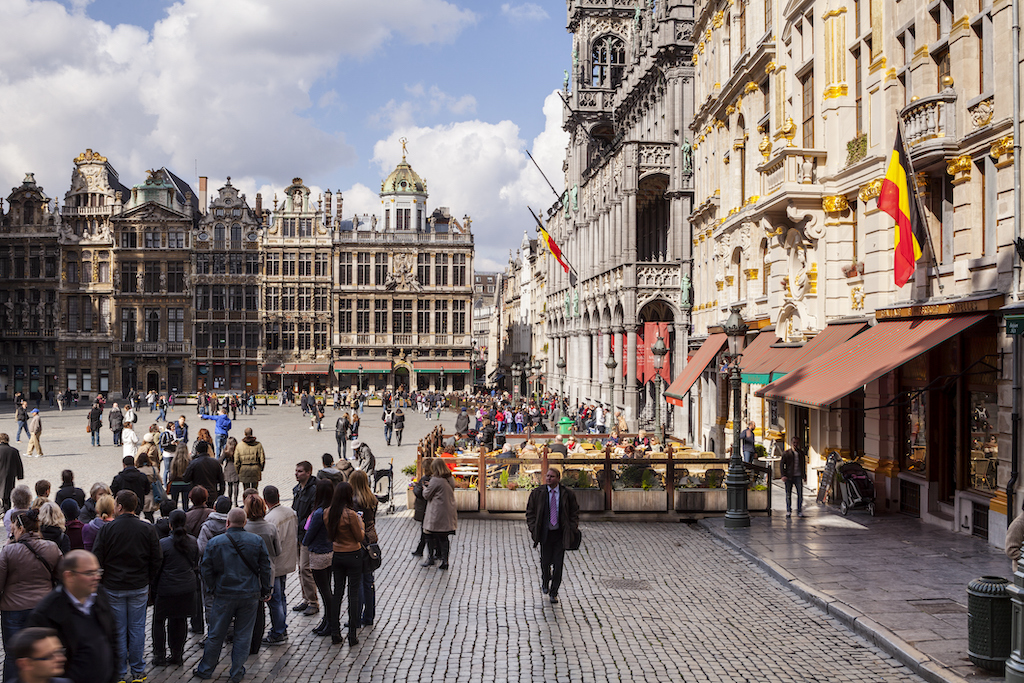
The Grote Markt in Brussels, Beglium. (Julian Elliott Photography / Getty Images)
Belgium may be one of Western Europe’s smallest countries, but its capital plays host to NATO and the European Union; indeed, “Brussels” has long been a shorthand term for the EU’s political and administrative machinery. One of Europe’s first industrial powers, it carved out its own colonial presence in the Congo during the “Scramble for Africa” of the late nineteenth century.
After World War II, Belgium developed one of Europe’s most elaborate welfare states, under pressure from the quasi-insurrectionary strike movement of 1960–61. In recent decades, however, regional identities have displaced class conflict as the main axis of Belgian political life. While its politicians have developed a complex system of multitiered federal government, there are still influential figures calling for outright separation between French-speaking Wallonia and Dutch-speaking Flanders.
Anton Jäger is a Belgian historian of political thought. This is an edited transcript from Jacobin Radio’s Long Reads podcast. You can listen to the episode here.