Did Elites Really Take Over Identity Politics?
In his new book, Elite Capture, Olúfémi Táíwò argues that elites have hijacked identity politics — but what if it belonged to them all along?
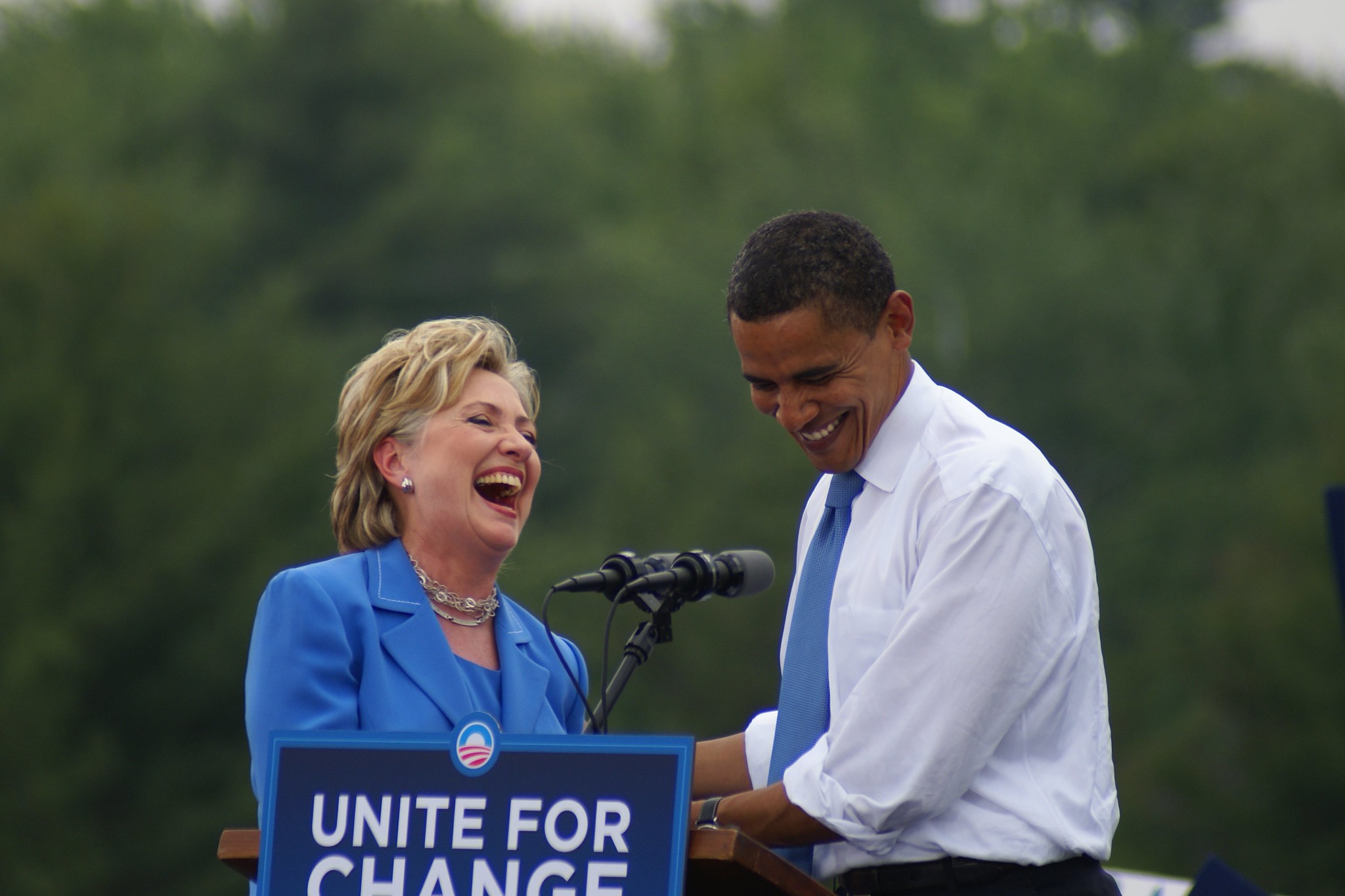
Hillary Clinton and Barack Obama, June 27, 2008. (Marc Nozell / Flickr)
Across the political spectrum, it has become difficult to engage in any discussion without running into the subject of identity politics. Its definition and its value — progressive force or enemy of egalitarianism — are hotly contested. What were previously niche academic debates have now become mainstream talking points. Somehow millions now seem to have a view on critical race theory, wokeness, and the 1619 Project.
Elite Capture: How the Powerful Took Over Identity Politics (and Everything Else) by Olúfémi Táíwò, a political philosopher at Georgetown University, is his second book-length intervention in these debates. The first, Reconsidering Reparations, published by Oxford University Press in January, provided a sweeping defense of reparations, reinterpreted as climate justice. Working within the tradition of liberal political philosophy, Táíwò advanced a critique of liberalism’s nationalistic assumptions.
By focusing on distributive justice within idealized closed communities, theorists working within the tradition of the American political philosopher John Rawls fail to think globally about the relationship between nation-states and historically about the causes of inequalities, Táíwò argued. The result of this shortsightedness is that Rawlsianism is incapable of developing a theory of justice that seeks to address historical wrongdoing across borders. As an alternative, Táíwò proposed what he termed a “constructive” theory of reparations, the aim of which was to organize a political project seeking to create a more just world order rather than simply distribute cash or goods to victims of oppression. An attentive look at history, he showed, reveals a picture too complex for identarian blame games. The most urgent goal of this project is nothing less than a global coordinated response to climate change, targeting the world’s poorest nations.