Beyond “Race Relations”
Barbara and Karen Fields, the authors of Racecraft, on the illusion of race, the dead-end of "whiteness," and the need to revive class politics.
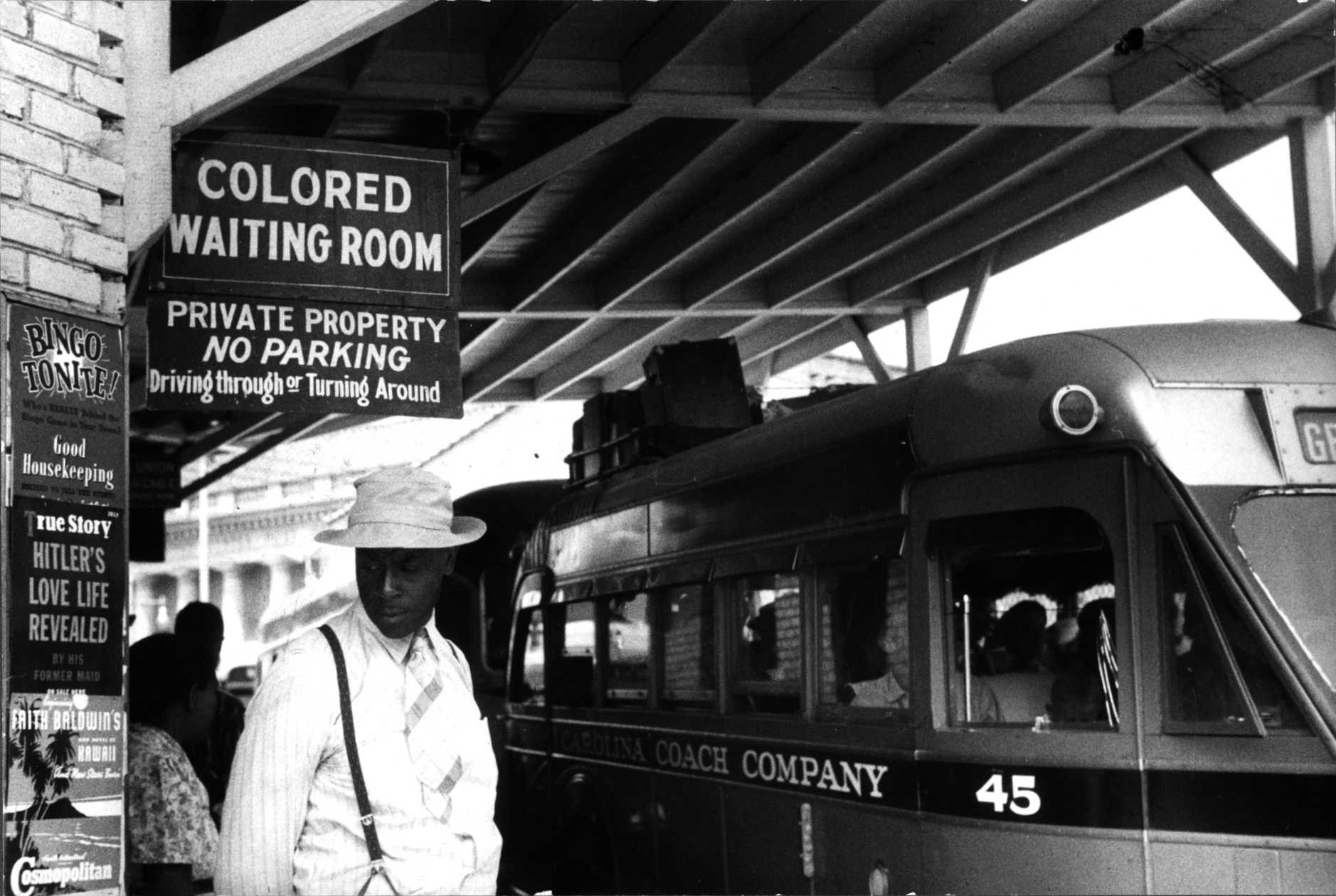
“At the bus station in Durham, North Carolina,” May 1940.Jack Delano / Wikimedia
With a Fox News-animated bigot in the White House and inequality at spectacular heights, discussion of American racism has returned to the center of US politics. The wealth of those categorized as black evaporated under the Obama administration, and today, the Trump administration restricts freedom of movement to scapegoat migrants for economic crisis, while casting white supremacists and those who fight them in the streets as morally equivalent, bestowing Oval Office-granted legitimacy to racist violence.
It’s a terrifying situation that that has led many to seek out explanations of its historical roots. A recent criticism of Ta-Nehisi Coates by Cornel West became a means to debate not only the origins of racism and class inequality, but also the most effective means of fighting both in the US and globally. In this moment, the US left can advance a deeper and broader conversation about how racism functions in neoliberal, imperial America, and how to build working-class organizations that fight for social justice for all.
But that opportunity requires overcoming a powerful ideological legacy. The dominance of neoliberalism frames inequality as deriving from personal responsibility or the lack thereof and replaces structural analysis with a focus on “race relations.”