College-Educated Workers Will Continue to Play a Key Part in Labor Organizing
In recent upsurges of working-class organizing among teachers, nurses, Starbucks baristas, and Amazon workers, college-educated workers have played central roles. That won’t change anytime soon.
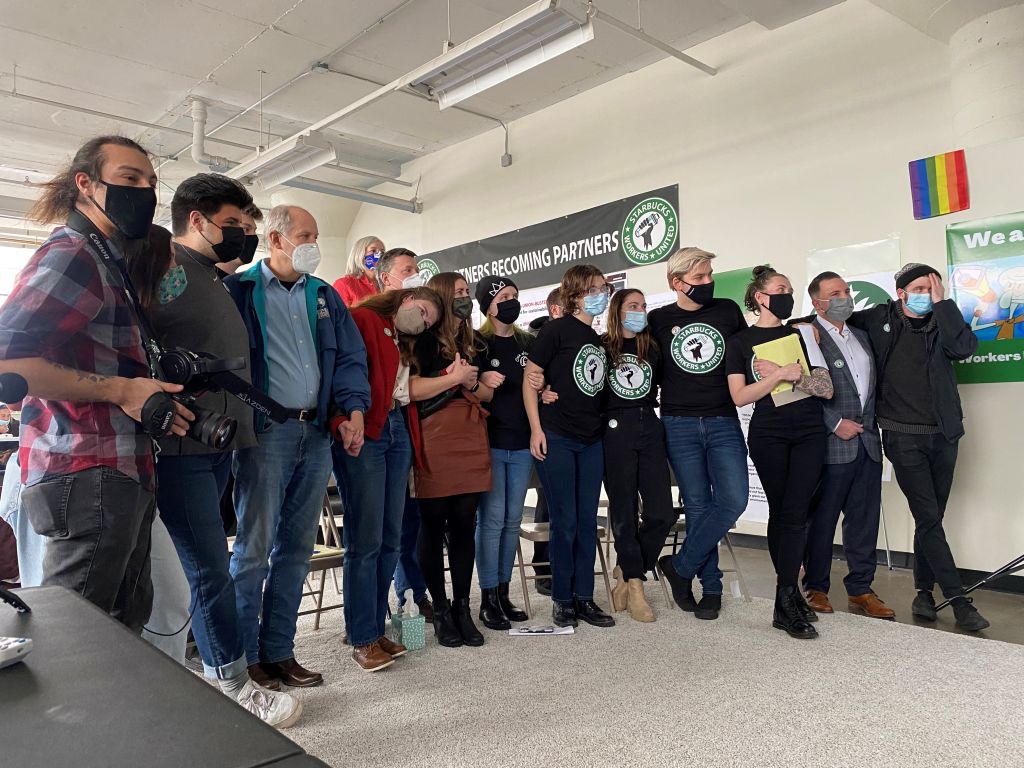
Starbucks employees wait for results of a union vote count, on December 9, 2021, in Buffalo, New York. (Eleonore Sens /AFP via Getty Images)
It’s too early to declare that labor is back, but it’s clear that something is stirring among America’s working people.
Some of this can be explained by contextual factors that make union organizing more rational and less risky, like rising inflation and a very tight labor market. But workers don’t automatically organize in response to such conditions. In many cases, a group of workers willing and able to take the lead — what labor organizers call a committee — needs to push and prod their colleagues to take collective action. At Amazon, Starbucks, and other employers, these committees have attracted workers from different social backgrounds. But one thing that stands out from the current bump in organizing is just how many of these workplace leaders seem to be young, well-educated, and politicized.
A recent New York Times report by Noam Scheiber zooms in on this phenomenon, calling it the “revolt of the college-educated working class.” Among the people the piece profiles are an REI worker with bachelor’s and master’s degrees in education; a Starbucks worker with a bachelor’s in music education and a master’s in opera performance; and an immigrant Amazon warehouse worker with a PhD in public policy.