Transnistria Has Soviet Flags, but Its Oligarchs Want to Trade With the West
- Loren Balhorn
Russia has long used breakaway states in Abkhazia and Transnistria to assert military power abroad. Yet the regions’ recent history also shows their growing integration into Western capitalism — and the limits of Moscow’s imperial power.
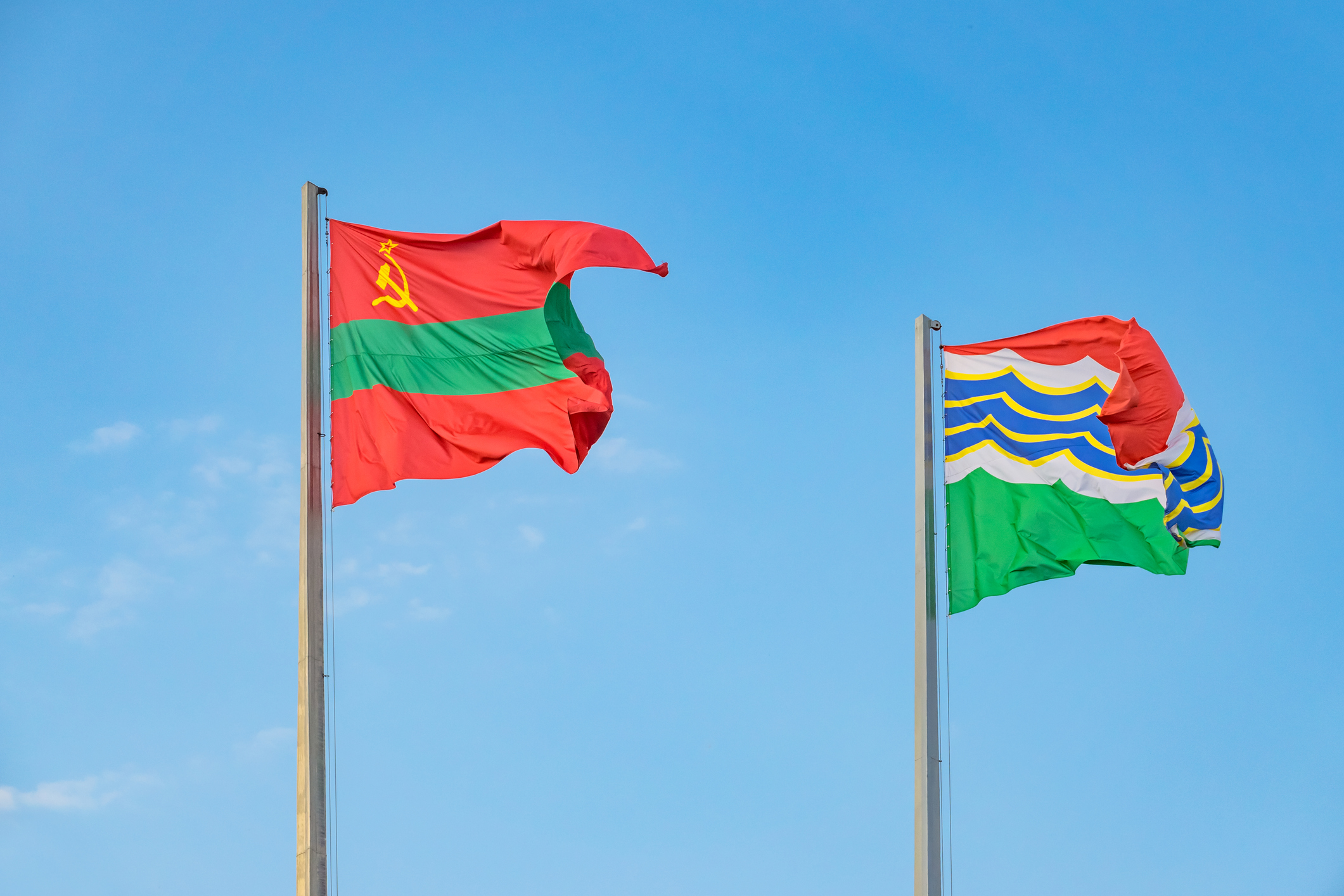
The flag of Transnistria and the flag of its capitol city, Tiraspol. (benedek / Getty Images)
Russia’s illegal invasion of Ukraine and the unprecedented Western sanctions against it have given fresh impetus to claims of a “new Cold War.” According to the standard narrative, a number of states along Russia’s border including ally Belarus, Armenia, and some Central Asian republics are on their way to forming a “new Eastern bloc,” with the Russian world (Russki mir) at its core. The de facto states of Abkhazia and Transnistria — two breakaway regions closely linked to Russia but not internationally recognized as independent states — both belong to this world and play an important role for the Russian empire and, to a lesser extent, the “new Eastern bloc.”
Today, there is just one truly global empire — the US one, which spans the planet. Following the conclusion of its rivalry with the Soviet Union toward the end of the twentieth century, Washington had no global competitors for two decades. China’s unprecedented economic rise over the past fifteen years has turned it into an economic competitor that challenges global US dominance, but Beijing has not yet harnessed this growth to construct a regional bloc of its own.
In the north of Eurasia, however, the Russian empire does still exist. Economically, Russia is a fairly minor player on the global stage. According to the World Bank, Russia’s GDP in 2021 was slightly lower than that of South Korea and slightly higher than that of Spain. The Russian Federation simply does not possess the economic might to bind a number of smaller states to it as a regional hegemon.