During Ramadan, Israel Seems to Relish Attacking Palestinians
Ramadan is the most important holiday in the Islamic calendar. But for Palestinian Muslims, Ramadan is characterized by constant harassment, attacks, and brutal violence by Israel.
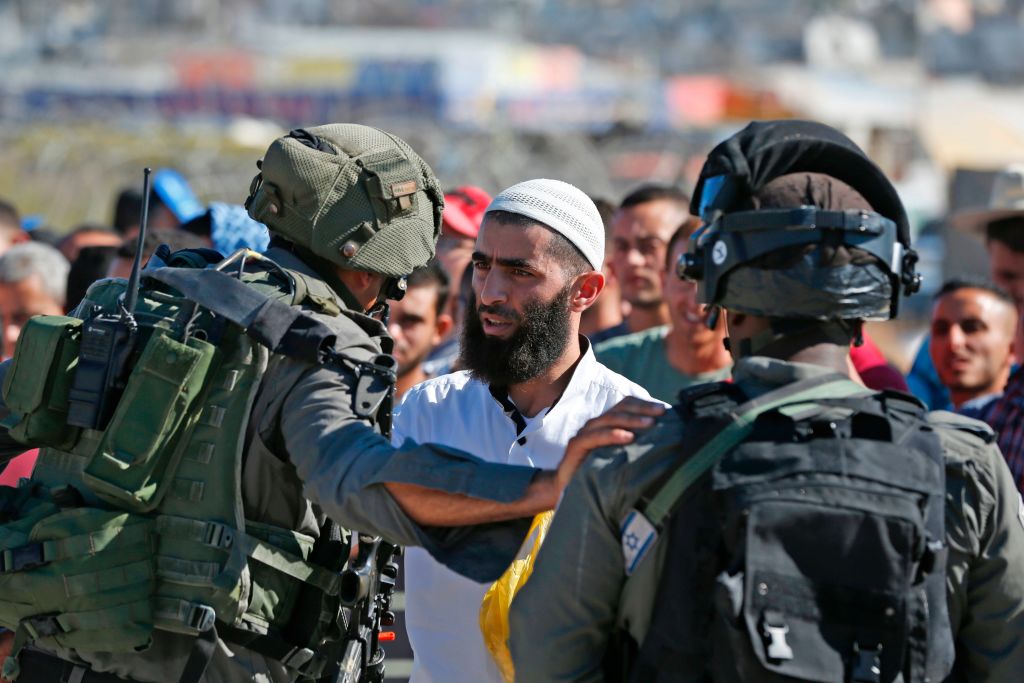
Israeli security forces question a Palestinian man as crowds make their way through the Israeli Qalandia checkpoint in the occupied West Bank to attend Friday prayer during Ramadan. (Abbas Momani / AFP via Getty Images)
No matter where I am in the world, I have always celebrated Ramadan. I remember being surrounded by my Palestinian family in America and gorging myself on food before putting our meal to the side once we heard the calls to prayer at sunrise. Ramadan is so much more than the simple act of fasting, it’s a remembrance of our faith and our people.
Starting on Saturday, April 2, hundreds of millions of Muslims worldwide embarked on Ramadan, the holiest month in the Islamic calendar, celebrated by consuming no food or water from sunrise to sunset. But for Palestinians living under Israeli occupation, celebrating this highest of holidays can only be done through immense difficulties.
Surrounded by towering walls of barbed wire, the people of Gaza live every day enclosed in what many have referred to as “the world’s largest open-air prison.” Since the illegal Israeli blockade in June 2010, which prevents Gazans from leaving the city and prevents any international support from arriving there, the humanitarian crisis in Gaza has grown severe. Half of Gaza’s 1.8 million people are children, all of whom are subjected to Israel’s imprisonment; 38 percent of Gazans live in poverty, 54 percent are food insecure; and 35 percent of Gaza’s farmland is totally or partially inaccessible due to the occupation. And Israel doesn’t let up for Ramadan.