How Socialists and Trade Unionists Built a New Labor Organizing Model During the Pandemic
Millions of workers want a union. The Emergency Workplace Organizing Committee, a project launched by socialists and the United Electrical Workers at the beginning of the pandemic, offers insights into how to organize them.
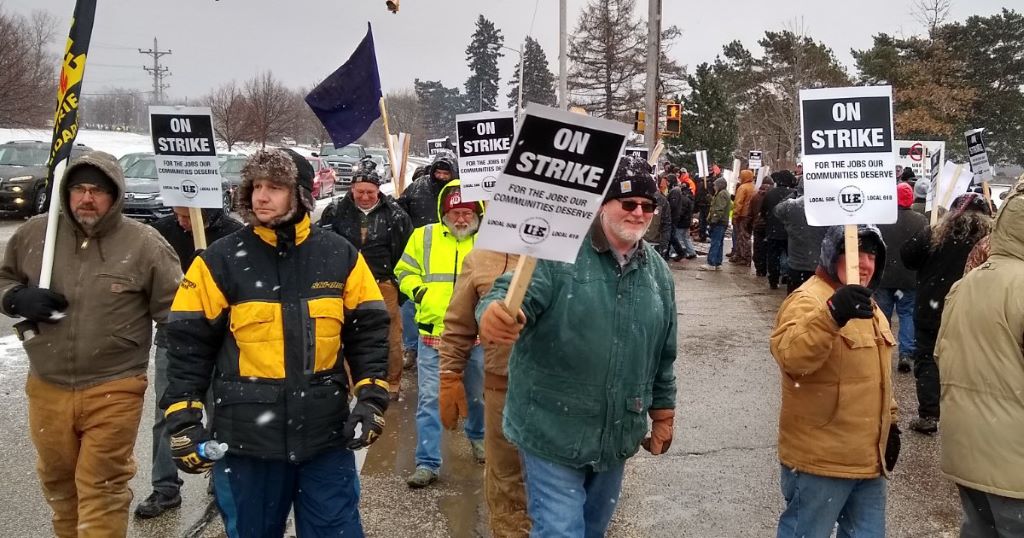
Real working-class power comes from organized workers fighting the boss for better conditions. (UE Union)
We know the US labor movement is too small. Our current union density, or membership rate, is very low, about 10 percent of the total workforce. This includes around just 6 percent of private sector workers, and it’s been falling nearly every year for decades. To put this crisis in perspective, the union membership rate hasn’t been this low in more than a century. Wages, benefits, and working conditions for many workers are not improving, and in some ways have gotten worse in recent decades.
Furthermore, union membership is concentrated in too few states. Nearly half of the 14 million union members live in just six states. And in ten states, the union membership rate is less than 5 percent. That means there are too many elected officials that have no fear of voting against union and workers’ interests. Politically, we won’t accomplish many ambitious socialist goals with such a low level of worker organization. A socialist movement requires a strong and militant labor movement.
In the 1950s, the union membership rate was higher than 30 percent. We need to strengthen the labor movement dramatically to meet and ideally surpass this figure. A higher union membership rate will mean more worker power overall.