Chile’s Private Bus Companies Tried to Repress the Working-Class Vote. It Backfired.
On election day in Chile, private bus companies refused to transport working-class voters to polls to help the right-wing candidate. The Left and unions rapidly organized to counteract the boycott — and socialist candidate Gabriel Boric emerged victorious.
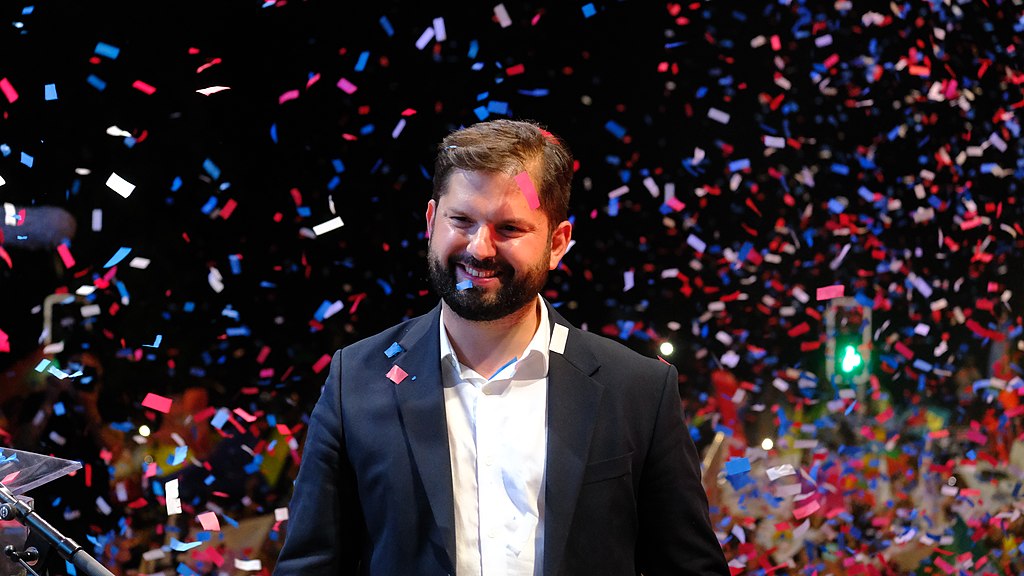
Gabriel Boric, after winning Chile’s presidential election on December 19, 2021. (Fotografoencampana / Wikimedia Commons)
On December 19, 2021, the day of the Chilean presidential election, rumors circulated of a corporate boycott intended to sway the election in favor of the right-wing candidate. As the day wore on, they were confirmed: private bus companies had cut service to working-class neighborhoods in Santiago and other cities, preventing potential left-wing voters from reaching the polls. Thousands of people were left waiting at bus stops, while photographs emerged showing of hundreds of buses idling at company garages. To vote in Santiago, people would have to trudge long distances in nearly 100 degree Fahrenheit heat.
The final round of the Chilean presidential elections was not merely about who would occupy the presidential office. It was about the fate of the constitutional reform process that began following the mass uprising in 2019, kicking off a political revolution that threatened to end neoliberalism in Chile. The constitutional process was years in the making, and now its forward momentum was threatened by buses that refused to budge.
The two candidates, José Antonio Kast and Gabriel Boric, represented opposing views on the process. Kast — a supporter of the Augusto Pinochet dictatorship and representative of a far-right, radicalized version of the government of outgoing president and billionaire Sebastián Piñera — declared his opposition to the constitutional rewrite, while the socialist Boric firmly supported it. If the ultraright candidate won, the executive power would be a fierce enemy of the constitutional process, while if the left-wing candidate won, the executive power would become an ally.