A Horrifying Report Shows the Miserable Working Conditions at Kroger
A survey of thousands of Kroger workers finds that while its executives rake in millions, homelessness and food insecurity are rampant among its workforce.
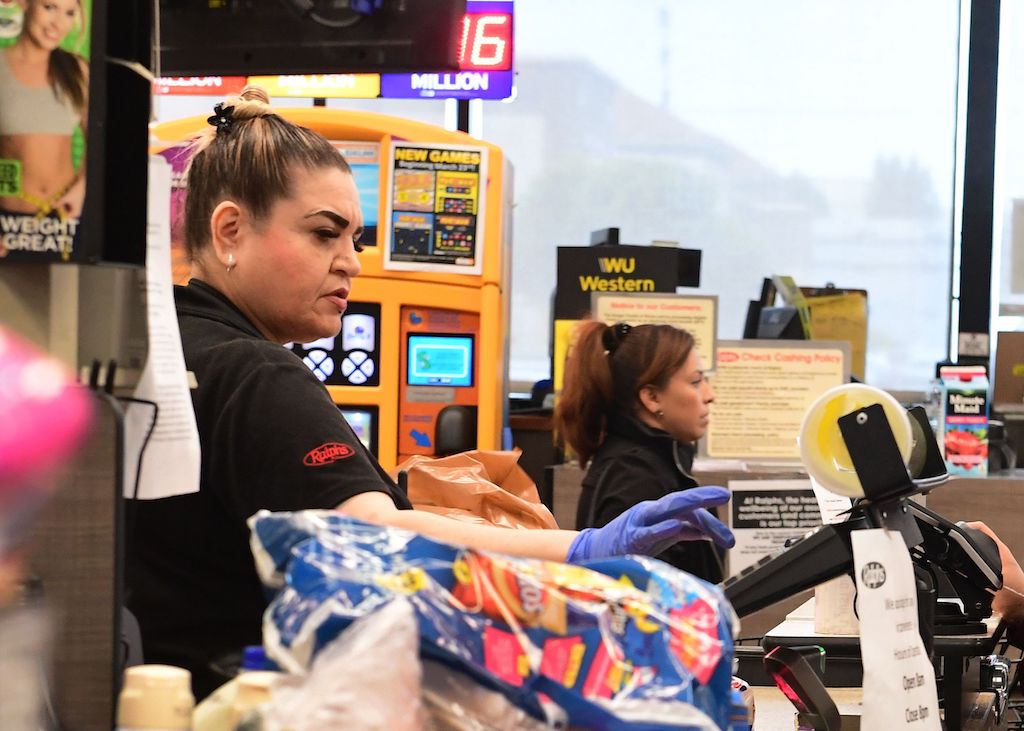
A grocery store worker rings up items at a Ralphs Supermarket in California. (Frederic J. BROWN / AFP via Getty Images)
A survey of more than ten thousand workers at Kroger, the fourth-largest private employer in the United States, finds that homelessness and food insecurity are rampant among union grocery store employees lauded as essential throughout the pandemic. Among the respondents, who work at Kroger-owned stores in Southern California, Colorado, and Washington State, 14 percent have been homeless in the past year, 36 percent worry about eviction, and more than three-quarters meet the US Department of Agriculture’s definition of “food insecure,” with 34 percent of the respondents skipping or reducing meal size to stay afloat.
The survey was conducted in the summer of 2021 by the Economic Roundtable and funded by the United Food and Commercial Workers (UFCW), the union which represents these workers. Kroger is the largest supermarket chain in the United States, and the second-largest retailer, behind Walmart. The company operates some twenty-eight hundred stores under a variety of names: Ralphs, Dillons, Smith’s, King Soopers, Fry’s, QFC, City Market, Owen’s, Jay C, Pay Less, Baker’s, Gerbes, Harris Teeter, Pick ‘n Save, Metro Market, Mariano’s, and Fred Meyer are all Kroger entities. As of 2020, the company has 465,000 employees.
The pandemic has been a boon for Kroger, with dollars that would normally have been spent at restaurants instead going to grocery purchases, resulting in historic profits and skyrocketing cash on hand. The company earned $4.05 billion in operating profits in 2020, and by the end of the third quarter of 2021, Kroger had $2.28 billion in cash on hand, up from $399 million in early 2020.