Chile’s Socialist Resurgence Is a Century in the Making
Gabriel Boric’s presidential victory and a new constitution are the crowning achievements of Chile’s broad socialist movement. Now comes the hard part: fulfilling a vision of working-class prosperity that stretches back to Salvador Allende and beyond.
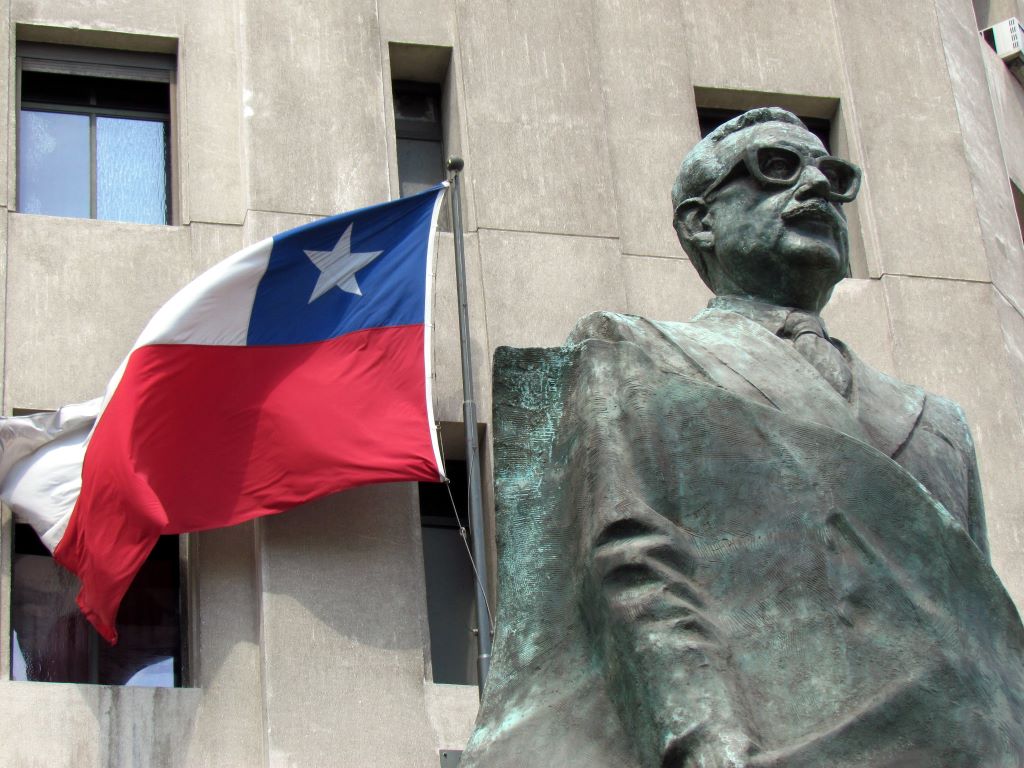
The Monument to Salvador Allende in Santiago, Chile. (David Berkowitz / Flickr)
It took the Chilean left over fifty years to return to power, and the victory is worth savoring. Still, Gabriel Boric, the new president-elect of Chile, will take office on March 11, 2022, with a daunting mandate: to begin the arduous work of dismantling a deeply entrenched neoliberal system and fulfill the lofty expectations for a more robust, constitutionally enshrined welfare state.
Boric may take some solace in knowing that his victory is the latest in a centuries-long struggle to make Chilean society a place of working-class well-being and prosperity. That was the dream of Salvador Allende when, in 1939, the still fresh-faced socialist physician assumed the role of health minister for the left-wing governing alliance of Pedro Aguirre Cerda’s Popular Front administration.
Allende would go on in 1970 to become the famed leader of the “Chilean path to socialism”: an unprecedented thousand-day-long experiment in popular governance that included nationalizations of key industries, the creation of working-class institutions of representation, and, perhaps most controversially, a program for radical, accelerated agrarian reform.