Universal Benefits Make Sense. Means-Testing Doesn’t.
Universal benefits aren't merely the morally just way to carry out welfare policies. They are also the smart way to carry out welfare policies.
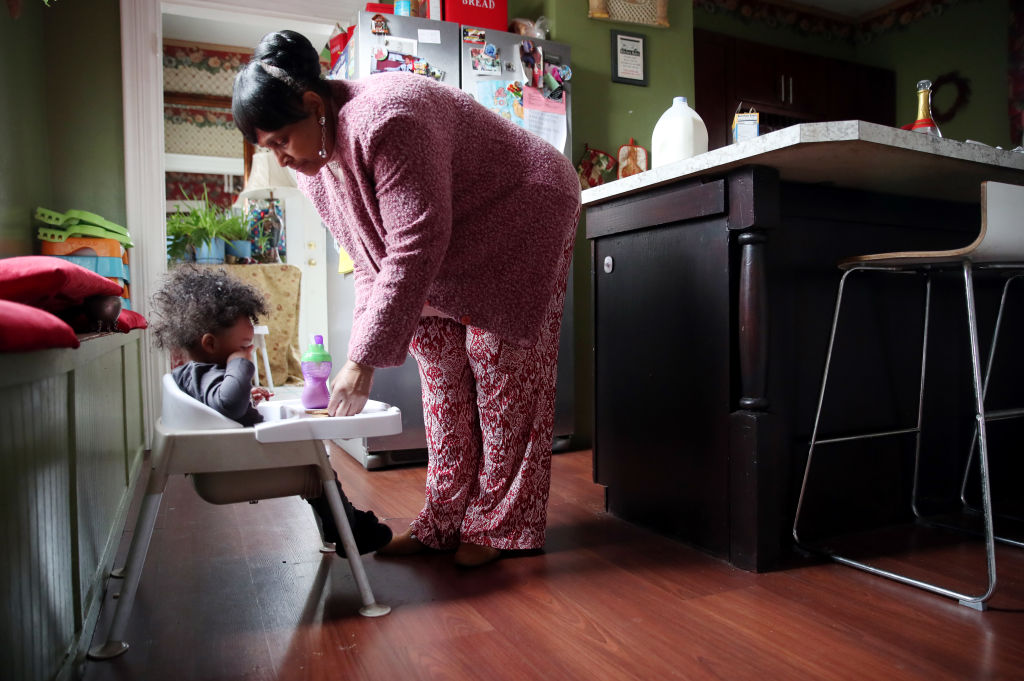
Rather than provide free childcare to all families, the Democratic childcare plan provides sliding-scale subsidies based on family income. (Craig F. Walker / The Boston Globe via Getty Images)
When critiquing the designs of the various programs in the Build Back Better legislation, I have tried to avoid simply saying that the programs should be bigger and more generous and instead focus on technical design details — benefit cliffs, activity tests, work history requirements, administrative burdens, and state participation, among others — that are bad regardless of the underlying generosity of the overall program.
I have done this not because I think inadequacy is an illegitimate critique but mainly because it’s an obvious critique that can be levied against most proposals without limit and because it’s easy for defenders of the legislation to say that making the program bigger and more generous is simply outside the realm of possibility, which is constrained by certain politically dictated budget constraints.
In this post, I am going to briefly dip into an inadequacy critique, but only in order to make a broader point about why universal benefits make sense as a purely distributive matter. I think this will be a novel point to most people who follow these debates because the universality versus means-testing fight has mostly settled into a few familiar arguments that aren’t actually the best analyses on the subject.