In Switzerland, Construction Workers Are Refusing to Shoulder the Costs of the Crisis
Workers on Switzerland’s construction sites have been particularly hard-hit by the pandemic. Bosses’ efforts to use the crisis to undermine established labor rights have prompted an impressive wave of resistance.
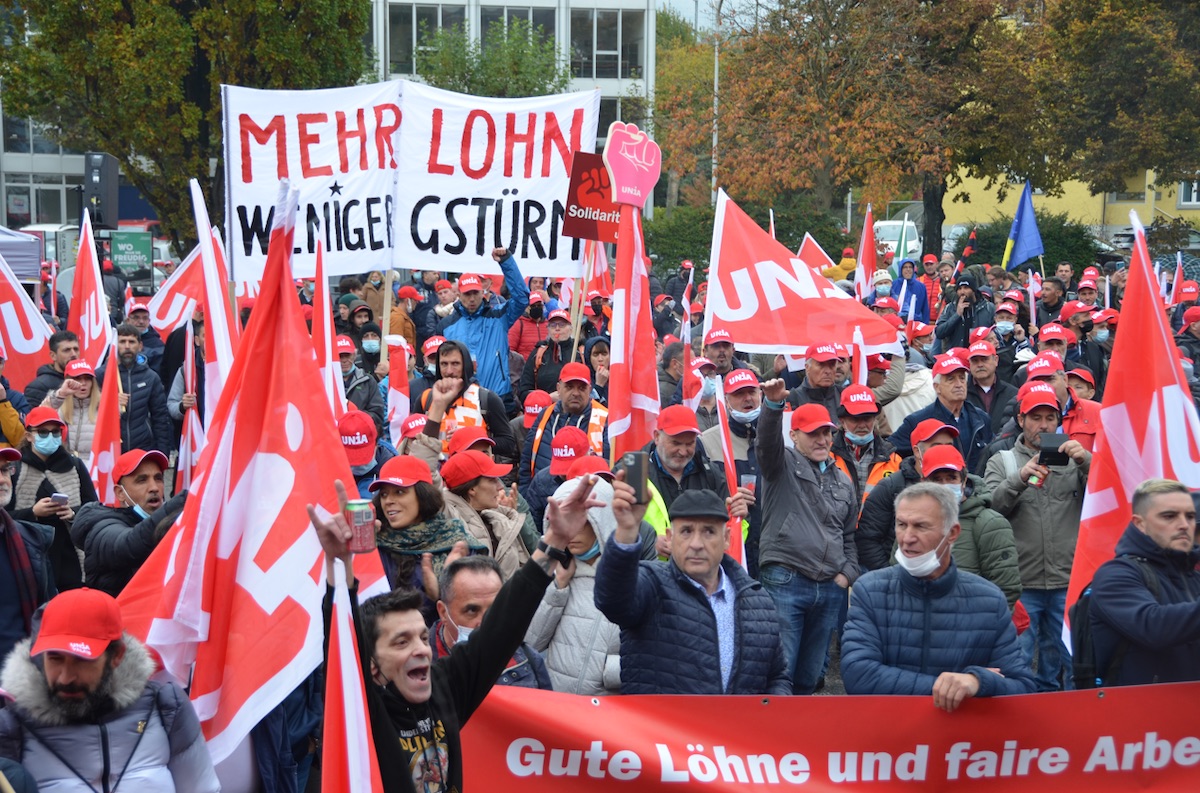
Thousands of construction, logistics, and health care workers took to the streets of various Swiss cities in October 2021 to demand higher wages and better working conditions. (Philipp Zimmermann / Unia)
As in many countries, the beginning of the COVID-19 pandemic caught Switzerland off guard. The alpine confederation is only about half the size of South Carolina and boasts a population of just 8.6 million. Yet the effects of the virus have been highly diverse — in economic terms as well as for people’s health. But one thing has remained the same throughout Switzerland’s different regions and across each wave of the pandemic: the working class has borne both the physical and economic brunt of COVID-19.
At the start of the pandemic, Swiss news outlets carried dramatic pictures of construction sites with overcrowded lunch areas, filthy hygienic facilities, and even a lack of running water. These realities stood in stark contradiction to public officials’ ubiquitous calls for social distancing and responsible hygiene measures.
These pictures were representative of the experiences many workers faced. The construction industry, with its over eighty thousand mostly immigrant workers, was particularly exposed. Even though conditions took different forms from one workplace to another, workers faced at least one of two grim realities: either working under increasingly precarious and unsafe conditions or living in fear of losing their jobs and income. Public leaders’ calls for social distancing and working from home have no doubt been sensible. Yet they have left a bitter and cynical aftertaste in the mouths of hundreds of thousands of construction workers, logistics employees, and others who cannot make that choice.