Australia Has Sacrificed Julian Assange to the United States
The US is fighting tooth and nail to get Julian Assange extradited to an American prison. Ever the dutiful ally, the Australian government is effectively giving over Assange, and flouting any commitment to human rights, freedom of the press, and democracy in the process.
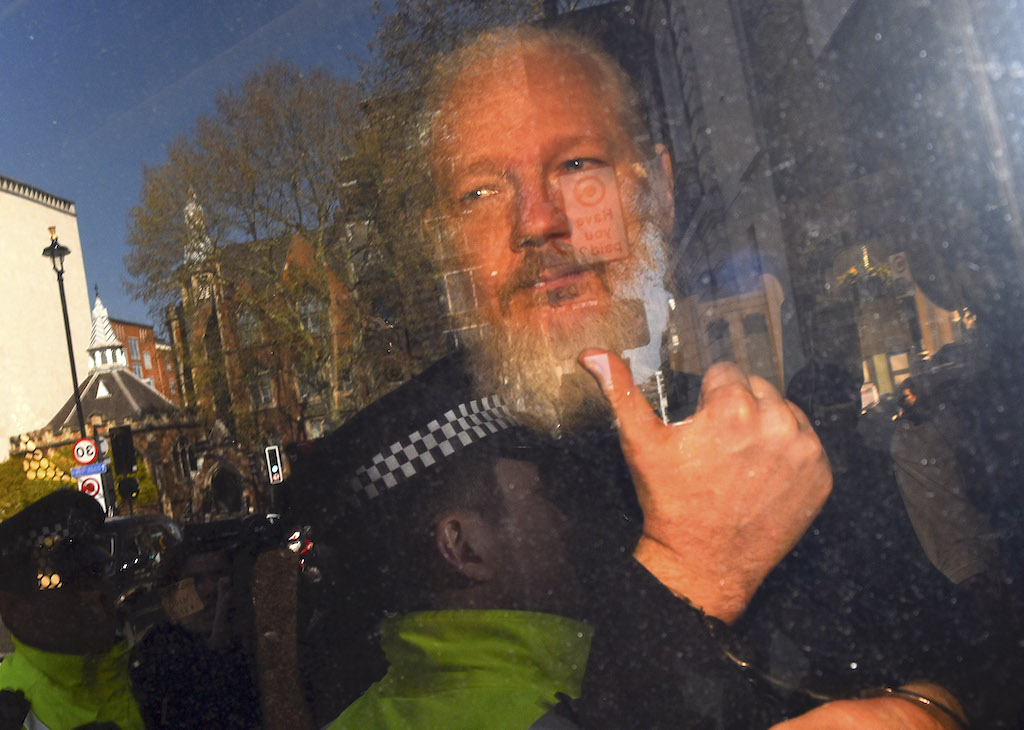
Wikileaks founder Julian Assange in London, 2019. (Alberto Pezzali / NurPhoto via Getty Images)
The United States has resumed its extradition campaign against Australian journalist Julian Assange with renewed fervor. In January this year, UK district judge Vanessa Baraitser had blocked a US extradition request — not on the basis that extradition threatened press freedom but that, in light of conditions in the US prison system, Assange would be at risk of suicide should he be transferred. Not to be deterred, the United States launched its appeal of the ruling on October 27, and the decision is due to be announced this month.
In all this, the Australian government has been disturbingly quiet. That Assange is an Australian citizen seems to count for nothing when it is the United States that is baying for blood. As early as 2010, former Australian prime minister Julia Gillard was so eager to please what she called “our best mates” in Washington that she suggested that Assange’s passport could be seized — until it was pointed out to her that this would be against the law. When asked about Assange’s arrest in 2019, current prime minister Scott Morrison simply said that “he should face the music.” Evidently the Australian government has abnegated all responsibility to protect one of its citizens from unlawful extradition.
Plots
The sheer extremity of the US campaign against Assange continues to come to light. In September, a bombshell report by Yahoo! News detailed a plot by the CIA to kidnap and assassinate Assange during his stay in the Ecuadorian embassy in 2017. The plot describes the US intelligence services’ response to the release of US state secrets, including war crimes committed in Afghanistan and Iraq, the manual for the Guantanamo prison camp, and the capabilities of US intelligence to hack into consumer goods for espionage purposes.