Vietnam War Soldiers Helped End the Vietnam War
The anti–Vietnam War movement cut across the civilian-military divide, with active-duty soldiers abroad and stateside defying their commanders and refusing to fight. Those soldiers played a key role in bringing the brutal war to an end.
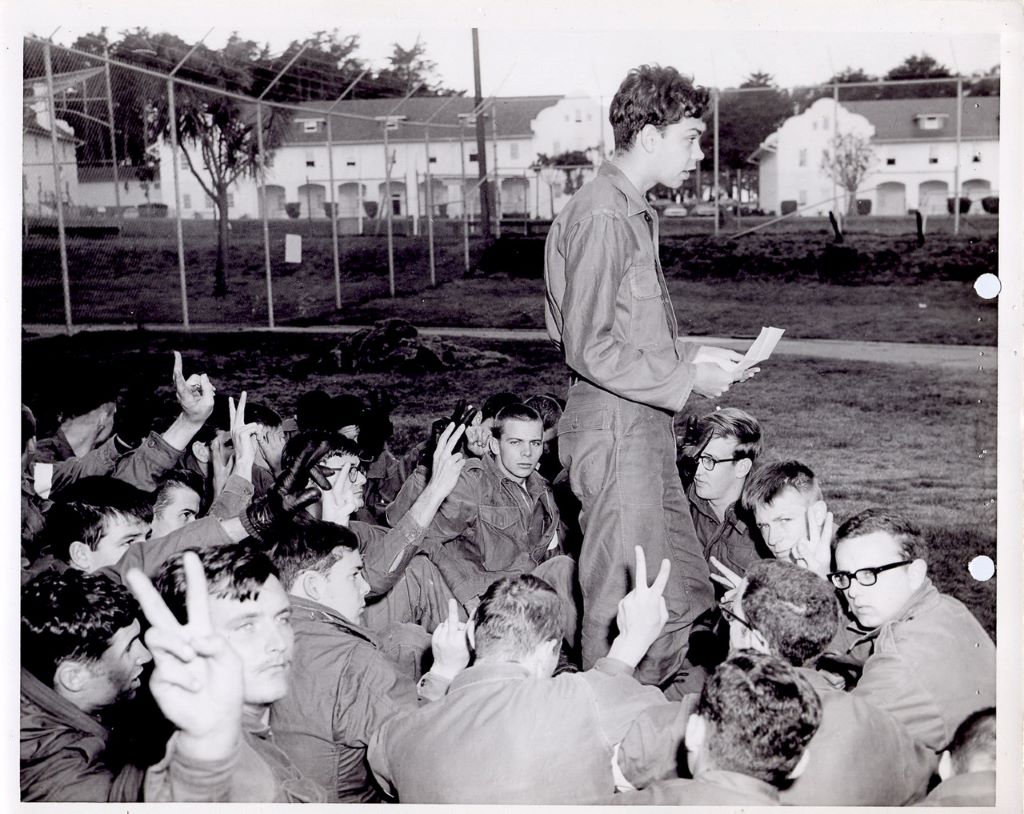
The Presidio Twenty-Seven “mutiny,” when soldiers jailed the Presidio stockade protested the murder of a fellow inmate and the Vietnam War, in October 1968. (US Army Phots / Wikimedia Commons)
The draft was one of the great atrocities of the modern era. If it isn’t remembered as such anymore, that’s only because it was a political crime in which every major power participated more or less equally — and that nearly every such power abandoned by the dawn of the twenty-first century in response to overwhelming popular dissent.
Although smaller than the mass conscriptions that delivered millions of soldiers to the world wars, it was the Vietnam-era draft that ultimately proved too horrific for the American public to long entertain. In part because the draft brought the terrible specter of military service into nearly every living room in the country, the anti-war movement of the 1960s and ’70s cut across what we would now call the civilian-military divide.
Today, the cultural chasm that separates military and civilian households is a topic of intense discussion, and in some quarters, serious worry. “The military has to remain embraced by the American people, whether you have a family member out there or not,” general James Mattis said to a gathering of military and defense department officials in 2018. And in 2019, the undersecretary of defense responsible for recruitment warned that “a widening military-civilian divide increasingly impacts our ability to effectively recruit and sustain the force.”