Edward Said Showed Intellectuals How to Bring Politics to Their Work
The Palestinian writer Edward Said wasn’t merely an intellectual who took brave political stands. Said’s whole approach to his work should be a model for politically engaged scholarship that doesn’t get bogged down in the thickets of academic culture.
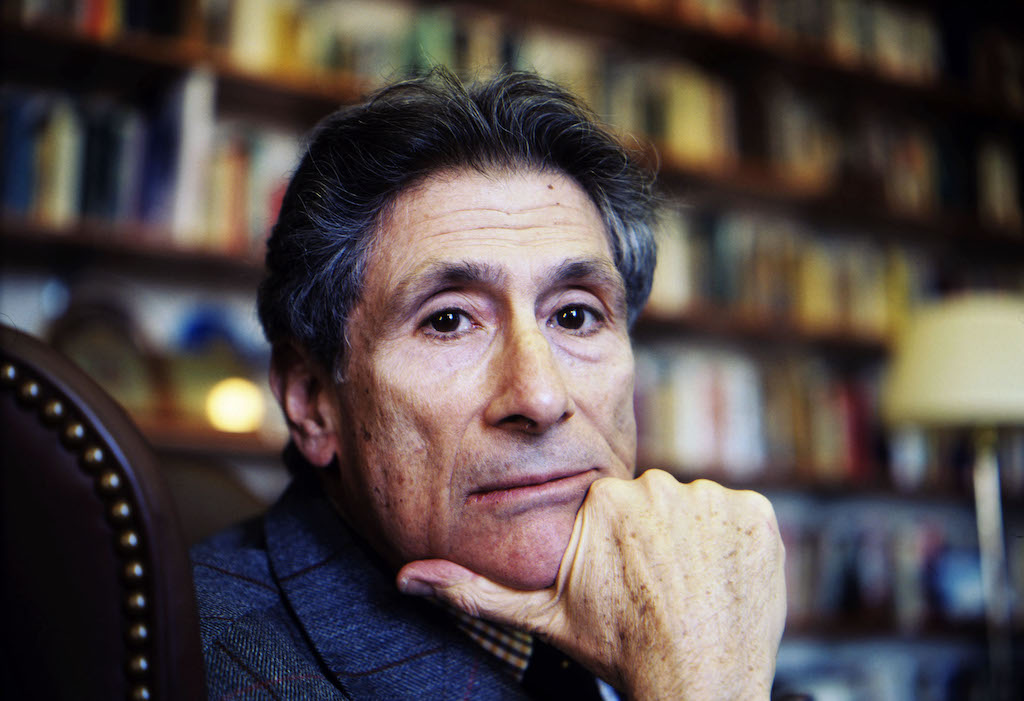
Professor and writer Edward Said in his office at Colombia University in New York City, 2003. (Jean-Christian Bourcart / Getty Images)
It is well known that Edward Said was a prominent intellectual who stepped outside of his professional role to argue for the cause of Palestine. Along with a few others — Noam Chomsky surely chief among them — Said stood out in the United States and Europe during the 1970s and ’80s as a voice of rationality, skepticism, and courage.
He challenged the prevailing mainstream positions on the Palestine/Israel question, which were largely rooted in liberal Zionism, demonstrating Washington’s complicity with Israeli conquest, colonization, and breaches of international and human rights law, and argued for a just peace. In doing so, he suffered obloquy of a particularly extreme kind, including personal attacks, death threats, and the firebombing and desecration of his office at Columbia University.
Said often liked to portray himself as an independent and nonaffiliated dissenter, and indeed he was never a member of any of the Palestinian parties, factions, or guerrilla groups. The idea of independence was very important to him, whether it was a matter of being an independent member of the Palestine National Council or carving out an intellectual and even epistemological vantage point in his scholarly work.