The Sponsors of COP26 Are Behind the Corporate Greenwashing Agenda
COP26 has been sold as a conference where world leaders will finally tackle climate change. But for its corporate sponsors, the conference is an opportunity to greenwash their practices of polluting for profit.
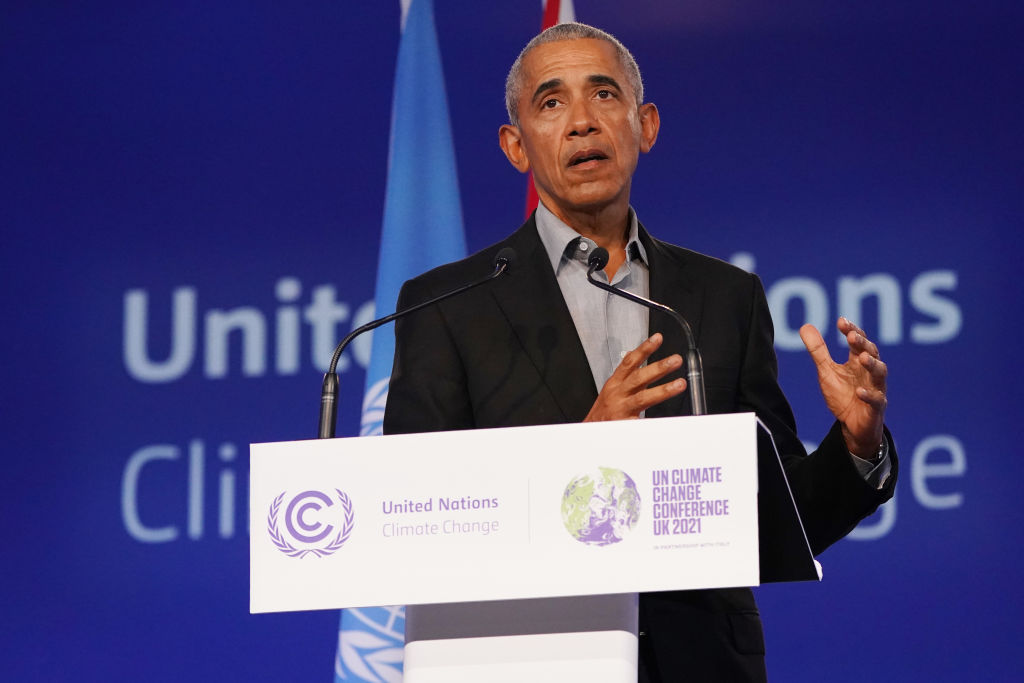
Former US president Barack Obama speaks during day nine of COP26 on November 8, 2021, in Glasgow, Scotland. (Ian Forsyth / Getty Images)
This month’s COP26 conference in Glasgow brings together world leaders behind a promise to finally take effective action on climate change. The profiles of those leaders themselves, whose grand statements have been plastered across the TV screens of the world, leave plenty to be desired: Most of the evidence suggests that they are unfit to lead on an issue that the rest of the year they basically ignore.
But beyond the sound bites, a more realistic understanding of the conference can be found by taking a deeper look into the “principal partners” that the conference’s website so proudly presents. If mainstream commentators were surprised by Greta Thunberg’s description of COP26 as a “greenwashing festival” and a “celebration of blah blah blah,” there was plenty of evidence for this trajectory in its list of corporate sponsors.
First up is Unilever, one of the world’s largest polluters, which produces enough plastic to cover eleven football pitches per day. A quick look at some plastic pollution NGOs confirms a considerable overlap between companies involved in initiatives supposedly intended to reduce plastic waste and those who produce the most plastic waste. Last year, Unilever elicited widespread praise for making moves toward sustainable palm oil production, but that shift only came after a long-standing history of relationships with rogue actors destroying rainforests, according to the Rainforest Action Network. (Another similar consumer giant partnered with COP is IKEA, which produces more emissions when shipping its cargo around the world than even Amazon.)