Jean-Luc Mélenchon: It’s Time to End the Dictatorship of Short-Termism
Writing in Jacobin, French leftist leader Jean-Luc Mélenchon argues that we need long-term planning, not market-based incentives, to fight climate change.
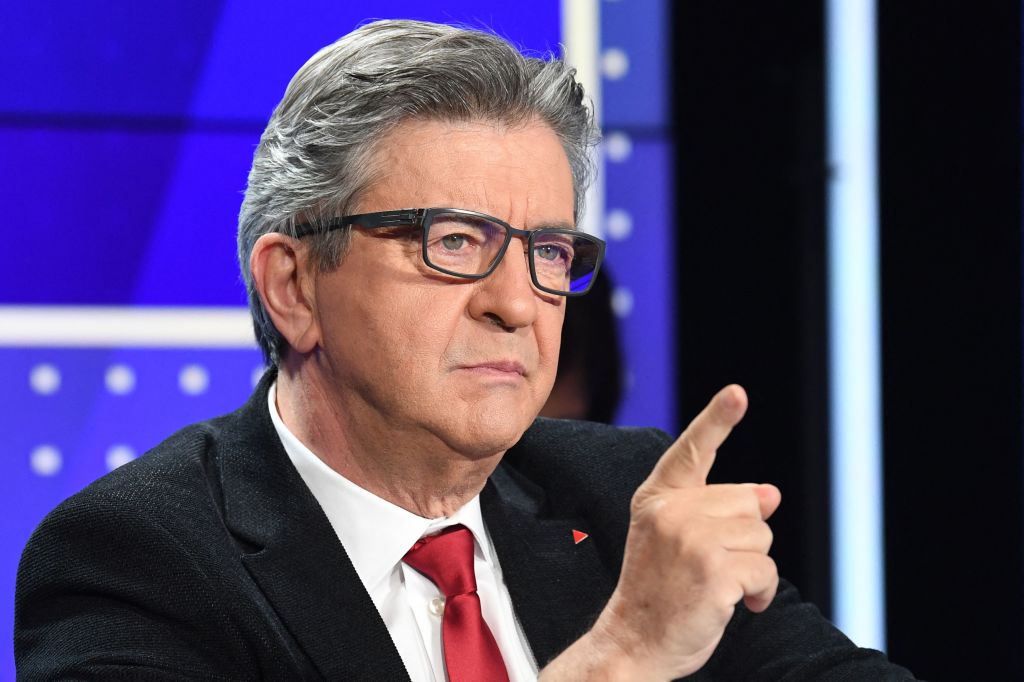
Leader of La France Insoumise and presidential candidate Jean-Luc Mélenchon takes part in a televised debate on September 23, 2021. (BERTRAND GUAY / POOL / AFP via Getty Images)
If you don’t like political philosophy, you can skip this post. No big deal. Otherwise, get on board quick.
As many of us know, climate change dominates the current political moment. But many people still think of its effects in the old ways, like back in the days of long and regular cycles of nature and the human activities attached to it. But there’s more to this problem than the transition from one climate to another. It won’t be like that. Everything is changing — even the change itself. We are now immersed in a wholly new situation, one of permanent and “structural” uncertainty — i.e., one now linked to the very nature of the course of events.
Let me reassure my readers: here I’m not going to enter into a meditation on the nature of time, after what I already wrote on that from a political standpoint in my book L’Ère du peuple. I will only cite the general idea: time is a property of the social universe in which it unfolds. There are, then, dominated times and dominant times. In this way of thinking, ecological planning is a reconquering of long time, which we wrest from the dictatorship of short-termism that governs the capitalist society of our present era. I spoke of “collective ownership of long time” through ecological planning. I set this in counter-position to the private ownership of time that exists when the short-termist rhythms of the market and of “just-in-time” market society impose themselves on each of us. Having said that much, I’ll now turn to the challenges that this way of seeing things is itself facing in the current era of uncertainty.