Gladys Berejiklian’s Resignation Shows That When Big Business Is in Charge, Corruption Is Inevitable
On Friday, New South Wales’s Liberal premier Gladys Berejiklian resigned after the announcement of a new anti-corruption probe into her conduct. The news created a political crisis and exposed the corruption endemic in Australia’s most populous state.
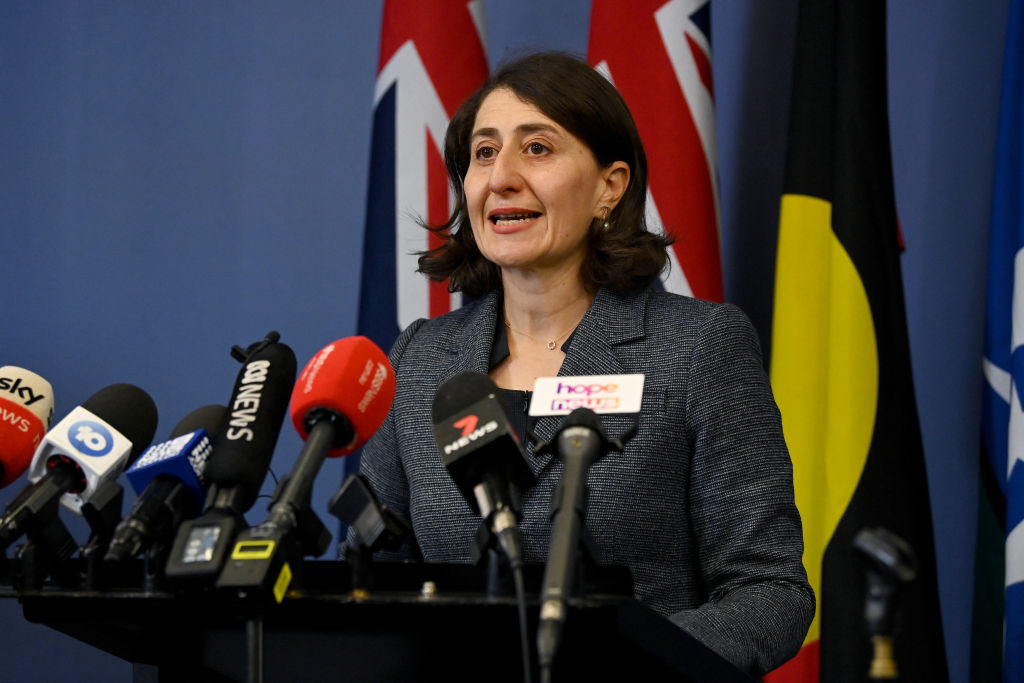
New South Wales premier Gladys Berejiklian speaks during a press conference on October 1, 2021, in Sydney, Australia. (Bianca De Marchi — Pool / Getty Images)
On Friday, the Liberal Party premier of New South Wales (NSW), Gladys Berejiklian, resigned. The news broke just three hours after the NSW Independent Commission Against Corruption (ICAC) announced a further probe into her conduct. Since Berejiklian’s shock announcement, two more ministers have resigned, including former leadership contender Andrew Constance and the Coalition’s deputy leader, John Barilaro.
Berejiklian had weathered a series of corruption scandals, the fallout from a bungled coronavirus quarantine strategy, and even a “koala war.” The last of these crises created fractures within her Coalition over whether to protect the habitat of the native Australian species. Before being shown the door by her party-room colleagues, “Teflon Gladys” seemed invincible, popular, and successful. Now, her career is over, and the corrupt and volatile core of NSW politics has been exposed yet again.
Endemic Corruption
Although NSW Liberal Party politicians have been careful to avoid criticizing the commission’s powers, it’s clear they regard ICAC as a threat and are accordingly attempting to undermine it. After forcefully asserting her innocence, Berejiklian implied that the timing of ICAC’s media release was political and that the commission’s potentially lengthy reporting timeline had made her position untenable.