Canada’s Far Right Is More of a Threat Than You Think
The good news is that Canada’s far-right party was shut out of Parliament in this week’s federal election. The bad news is that the People’s Party still tripled its vote and is now in a position to exert a dangerous influence on the political mainstream.
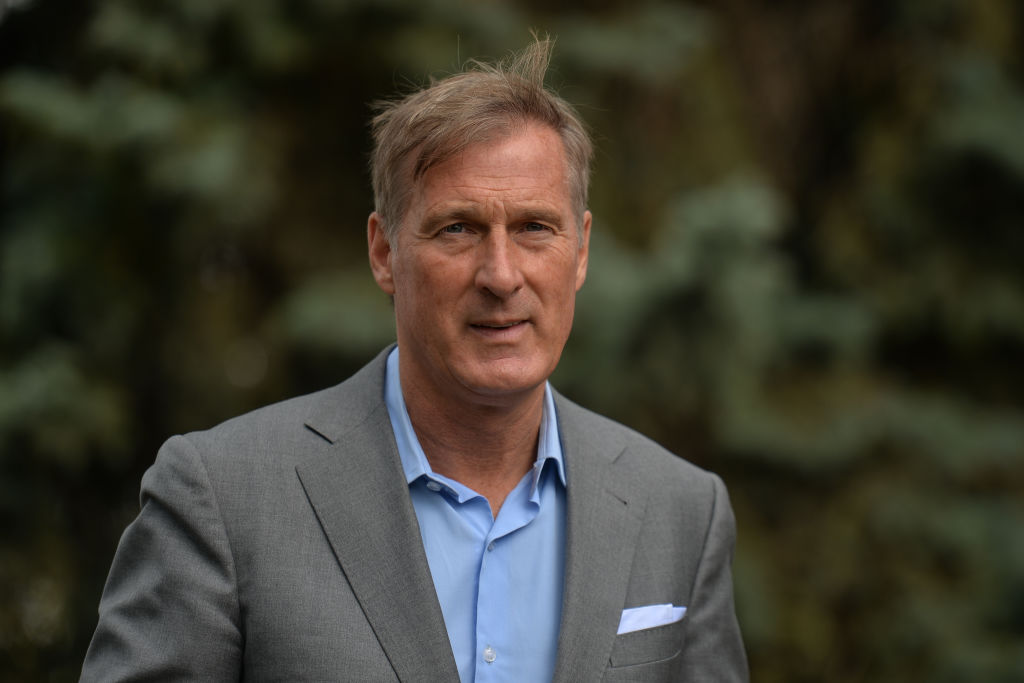
Maxime Bernier, leader of the People’s Party of Canada, meets with his supporters at an election rally in Borden Park, Edmonton, Alberta,on September 11, 2021. (Artur Widak / NurPhoto via Getty Images)
If there’s any silver lining to be found in the results of Canada’s pointless and indecisive federal election, it’s the failure of the far-right People’s Party (PPC) to win a single seat. In the context of a pandemic election tinged with widespread anger and resentment, the prospect seemed distant but genuine — a few polls even pegging its national support at over 10 percent. These projections, as it turned out, dramatically overestimated the party’s support and ability to mobilize voters. Ultimately finishing with just over 5 percent of the total vote, PPC leader Maxime Bernier fell well short of winning back his old Quebec district of Beauce (one he represented for over a decade as a Conservative MP and cabinet minister) and failed to conjure the surge many had predicted in the right-wing heartland of Alberta.
For this reason, it’s tempting to exaggerate the extent to which the People’s Party flopped — a characterization that is, if nothing else, psychologically easier to process than the alternative. The truth is that the PPC won more than 800,000 votes nationwide, up from the roughly 300,000 it captured in 2019, despite a largely hostile media and Bernier’s exclusion from all three televised debates. The PPC’s failure to enter Parliament can thus be taken as a partial defeat but not a wholesale repudiation. With another election likely to occur sometime in the next eighteen months, no one should be complacent about the PPC’s future prospects, or the genuine possibility of its eventually securing an electoral beachhead.
Founded in 2018, the PPC was born of Bernier’s sudden departure from the Conservative caucus after narrowly losing out on the party leadership to Saskatchewan MP Andrew Scheer. The obvious personal dimension notwithstanding, the exit was framed largely in ideological terms as Bernier declared his old party “too intellectually and morally corrupt to be reformed.” Having peppered his speech with complaints about multiculturalism and excessive political correctness, it soon became clear that the Quebec MP’s game was to found something decidedly to the right of the Conservative Party, and the PPC was duly created the following month.