The Market Is Incapable of Creating Affordable Housing
There isn’t a single place in the United States where minimum-wage workers can afford to live near their jobs. Addressing the affordability crisis will require a major rollback of market influence over the housing sector.
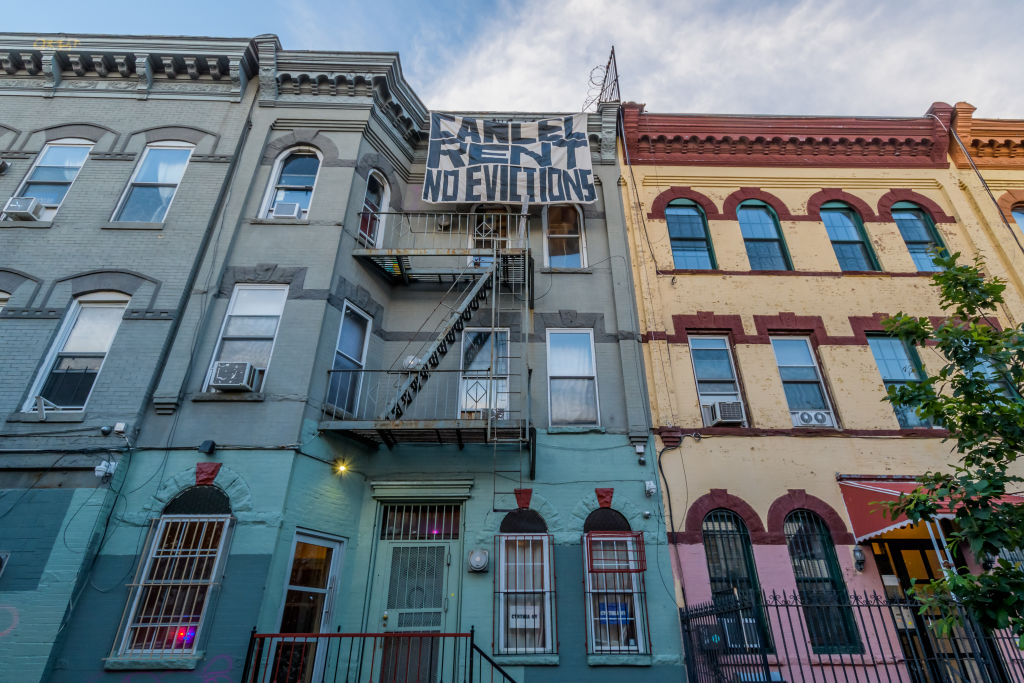
Tenants and housing activists dropped banners from their buildings during the pandemic to demand New York City cancel rent. (Erik McGregor / LightRocket via Getty Images)
Last month, the National Low Income Housing Coalition (NLIHC) published its annual report on what the minimum wage enables workers to rent. The report’s findings were both striking and bleak: in more than nine out of ten American counties, it’s quite literally impossible for someone earning minimum wage to afford a single-bedroom rental suite working forty hours a week. Data from the economic downturn of the past year has actually yet to become available, meaning that the situation is likely far worse than even the current numbers suggest.
Dan Threet is a research analyst at the NLIHC and a project lead on its Out of Reach report. Jacobin spoke to Threet about the organization’s recent findings, the landscape for renters in America, and the urgent need for an ambitious housing policy agenda that puts people before profits.
Luke Savage
Before we get into your findings, the report uses something called the “housing wage.” Can you explain what this is and how it’s calculated?
Dan Threet