The “Hot Spring” Showed That Greeks Were Willing to Fight
Ten years ago, Greece was gripped by square occupations expressing mass opposition to EU austerity policies. The movement’s strength was its ability to rally Greeks from outside the organized left — yet it was ultimately defeated by its lack of a clear political alternative.
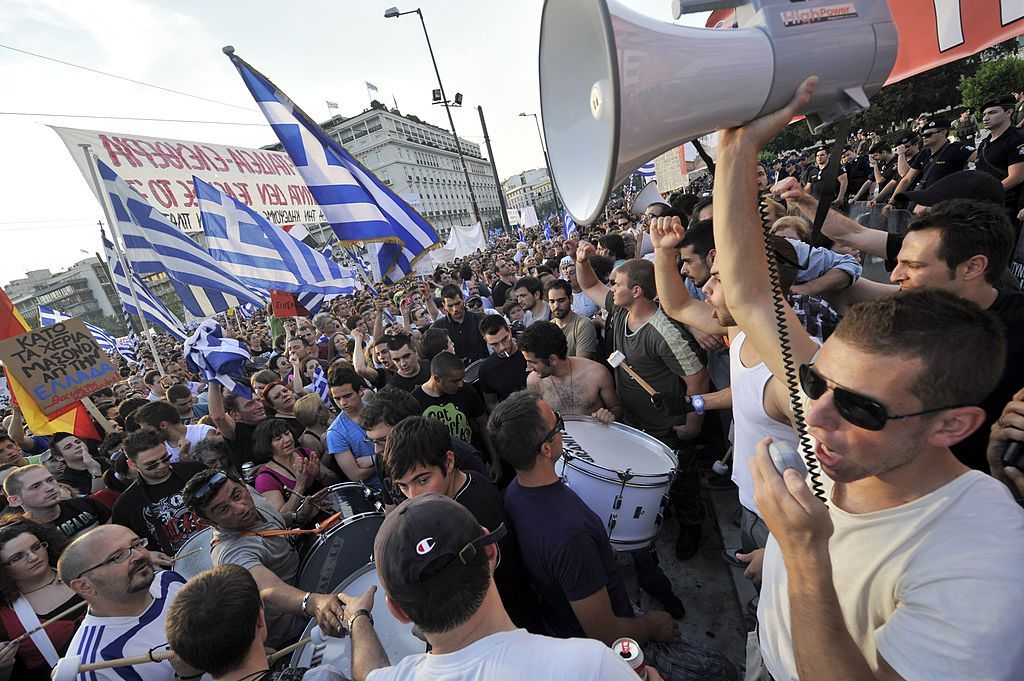
Thousands of protesters gather in central Athens’s Syntagma Square in June 2011. (Louisa Gouliamaki / AFP via Getty Images)
The Greek “hot spring” of 2011 was a climactic moment of the wave of popular insurgency that spread across much of the world that year. This wave had begun on the southern shore of the Mediterranean with the Tunisian revolution and the Tahrir Square uprising; it then spread to Spain with the Indignados, and then migrated via Greece to the United States with Occupy, before returning to the Mediterranean with the occupation of Istanbul’s Gezi Park.
Part of this international revolt, the square occupations involving hundreds of thousands of Greeks can also be situated within the domestic cycle of mobilizations that already shook the country in May 2010, when parliament passed the first memorandum of understanding with Athens’s European creditors. This wave of unrest would continue, in various forms, until summer 2015, even after the square occupations ended.
While there were many differences between the uprisings, the Greek movement also shared many characteristics with its counterparts abroad, especially in the Mediterranean. They each had an impressive mass character; a trans-class social composition, with young graduates bearing special weight; majority popular support; and a broad repertoire of actions, centrally the occupation of public space.