California Planted Trees to Fight Climate Change. Those Trees Are Now on Fire.
California’s emissions reduction program is going up in smoke because regulators severely underestimated the impact of climate change–fueled wildfires.
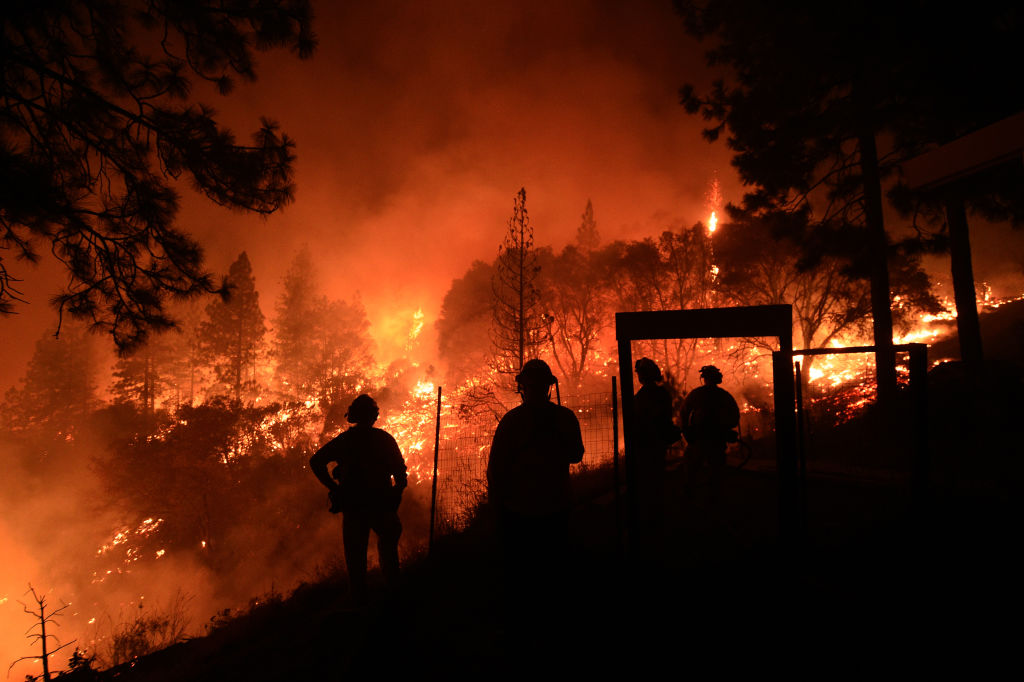
Firefighters work through the night to protect homes in California. (Neal Waters / Anadolu Agency via Getty Images)
In 2013, California passed a landmark law that capped greenhouse gas emissions, but let companies offset their pollution overages by investing in forest preservation throughout the country — the idea being that trees absorb excess carbon from the atmosphere. The statute was considered a model initiative to combat climate change, while providing businesses some flexibility in reducing their pollution.
Eight years later, though, there is a big problem: As of last week, there were more than forty-one thousand wildfires across the country, torching more than 4.6 million acres — a swath nearly the size of New Jersey. And more than a hundred fifty thousand of those acres have been in West Coast forests that were supposed to be offsetting corporations’ carbon emissions.
When the original program was conceived, California presumed that some forests would naturally burn — and therefore the law required polluters to buy slightly more woodland as an insurance mechanism to account for such losses. But experts say the amount of woodland set aside in these so-called “buffer pools” wildly underestimated the amount of trees that are now burning in the era of climate change.