A System That Makes Housing a Commodity Can’t Serve Human Needs
Even before the pandemic, America was in the midst of a massive housing crisis. Now, it’s far worse. Our housing agenda has to include investing in public housing, universal rent control, just-cause eviction, and a broad push to decommodify housing.
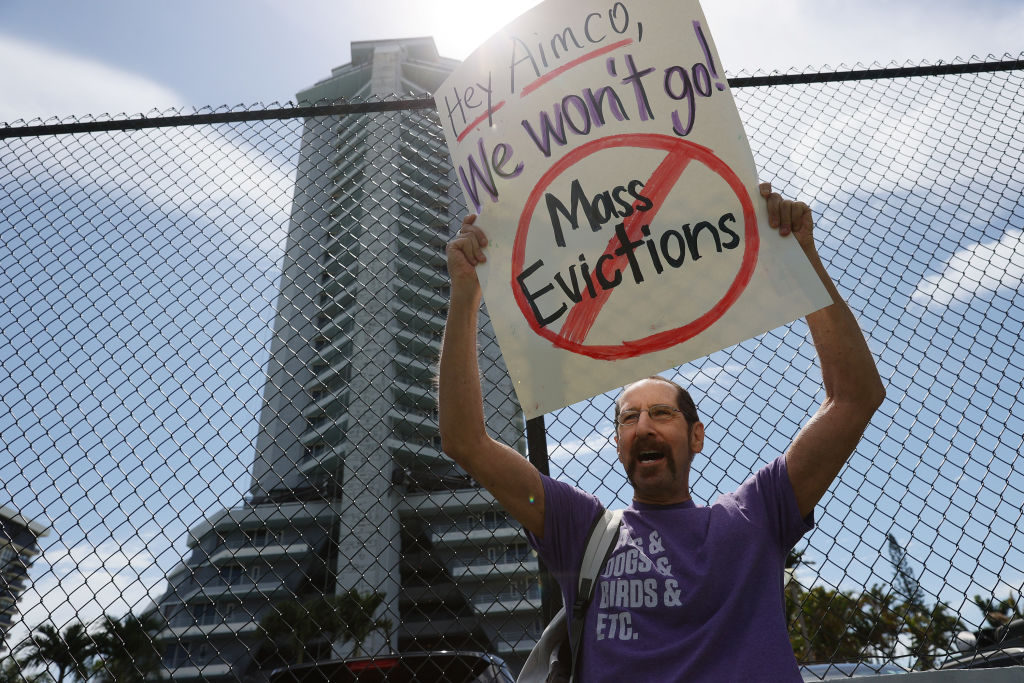
Tenants protest eviction notices in Miami, Florida. (Joe Raedle / Getty Images)
The devastating economic impact of the COVID-19 pandemic is now threatening to take away the very roofs over the heads of millions of Americans. More than half of US renter households lost employment income between March 2020 and March of this year, and one in five of those households is behind on their rent, according to the Harvard’s Joint Center for Housing Studies’ recent State of the Nation’s Housing report. Over four million Americans are telling the US Census Bureau they expect to be evicted or foreclosed upon in the coming months.
This crisis is shining a spotlight on a housing problem that existed long before the pandemic, says Dianne Enriquez of the Center for Popular Democracy (CPD). Even back in 2019, over ten million renters were paying more than half of their income for their housing. That equation put them at imminent risk for eviction or foreclosure, all while the United States gives hundreds of millions of dollars in subsidies to corporate landlords.
CPD is a network of over fifty community organizations working in low-income communities across the United States. Almost half of those organizations advocate for improved housing policies, and organize tenants and low-income homeowners. Dianne Enriquez, a longtime organizer of workers in the restaurant and health care industries, oversees CPD’s housing campaigns.