The Sydney “Green Bans” Show How We Can Transform Our Cities
In the 1970s, trade unions in Sydney began imposing “green bans” on property developments that were going to cause social and ecological harm. The movement should be an inspiration for challenges to the power of big business everywhere.
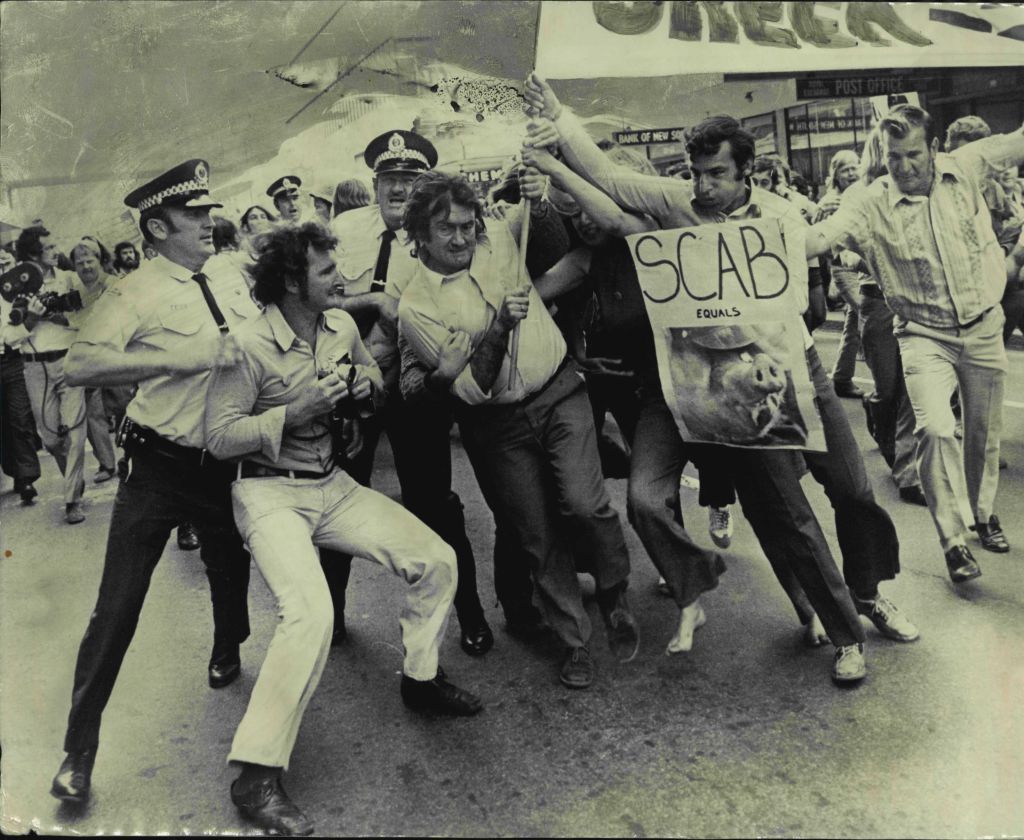
Builders Labourers demonstrate for the green ban in the Rocks in Sydney, Australia, on October 25, 1973. (Russell McPhedran / Fairfax Media via Getty Images)
Fifty years ago, in June 1971, the New South Wales branch of the Builders Labourers Federation (NSWBLF) voted to ban construction of a luxury housing development in the Sydney harborside suburb of Hunters Hill. Their bulldozer-driving comrades in the Federated Engine Drivers and Firemen’s Association followed suit. The goal was to protect Kelly’s Bush, one of the last undeveloped areas of bushland on Sydney Harbour.
Over time, the tactic they used came to be known as a “green ban,” distinguishing it from a more conventional “black ban.” While trade unions imposed the latter in disputes over wages and conditions, green bans blocked construction on projects that were environmentally or socially destructive, or that threatened sites with heritage value.
The Kelly’s Bush green ban resulted from an unlikely alliance. Hunters Hill was a wealthy suburb, and most residents had little to do with the workers’ movement. Earlier that month, however, the Battlers for Kelly’s Bush — a resident action group — held a meeting of over six hundred people. It called on the unions to protect the bushland.