François Mitterrand Gave French Socialists Power at the Price of Their Soul
Forty years ago today, François Mitterrand became the first socialist president of France’s Fifth Republic. But after his early attempt at left-wing reforms was defeated, Mitterrand’s tenure helped turn the Parti Socialiste into a pillar of the political establishment.
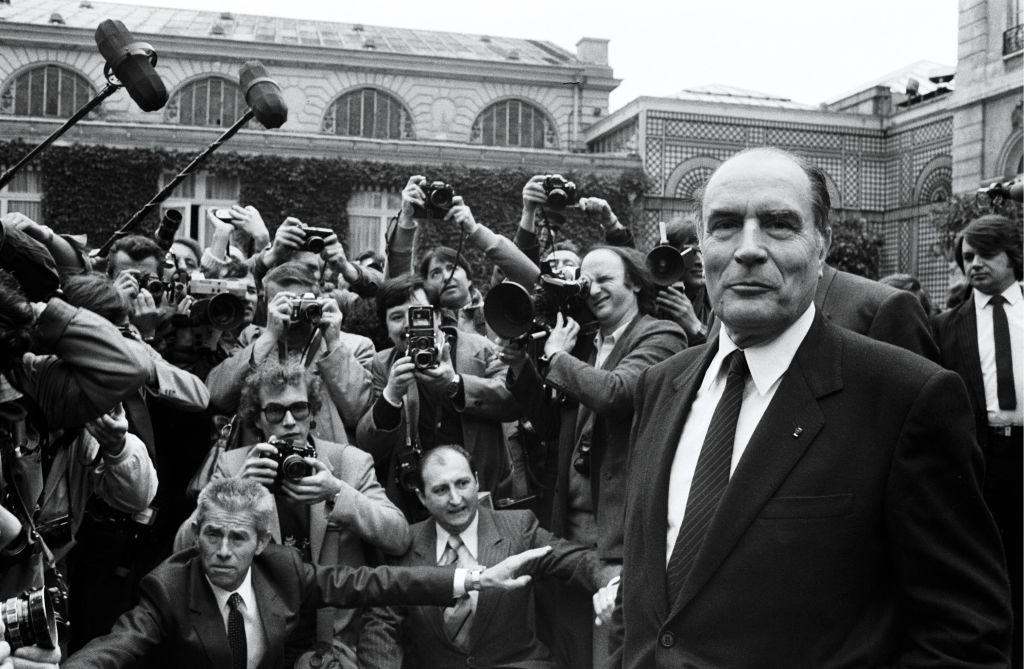
Francois Mitterrand surrounded by photographers during the French cabinet meeting at Élysée Palace on May 27, 1981. (PICOT/STILLS/Gamma-Rapho via Getty Images)
Seven years before the French presidential election of 1981 that brought François Mitterrand to power, Jean-Pierre Chevènement, a member of the left wing of the Socialist Party (PS), published a book titled Le vieux, la crise, le neuf(The Old, the Crisis, the New). According to Chevènement, the project of the PS should not be to “loyally manage the affairs of the bourgeoisie.” He made the following prediction:
If the Left found itself lifted into government, not to carry out its own program, but merely to grapple with the economic crisis, it would probably stay there for a shorter period of time than the social democrats of Northern Europe managed to do under more favorable conditions. It would come out of the experience profoundly discredited and removed from power once again for a generation.
Chevènement insisted that the conquest of the state machine should enable the PS to become “a link between the popular government and the mass movement,” and warned that the French left “will only avoid the pitfalls of embourgeoisement and institutionalization if it recognizes that the mass movement has an essential role to play as a source of pressure and criticism.”