Canada’s Communists Played a Vital Role in the Workers’ Movement
It’s a century this week since the Communist Party of Canada was founded. Historians often dismiss the party’s importance for the Canadian labor movement — but early on, it helped organize workers against steep odds.
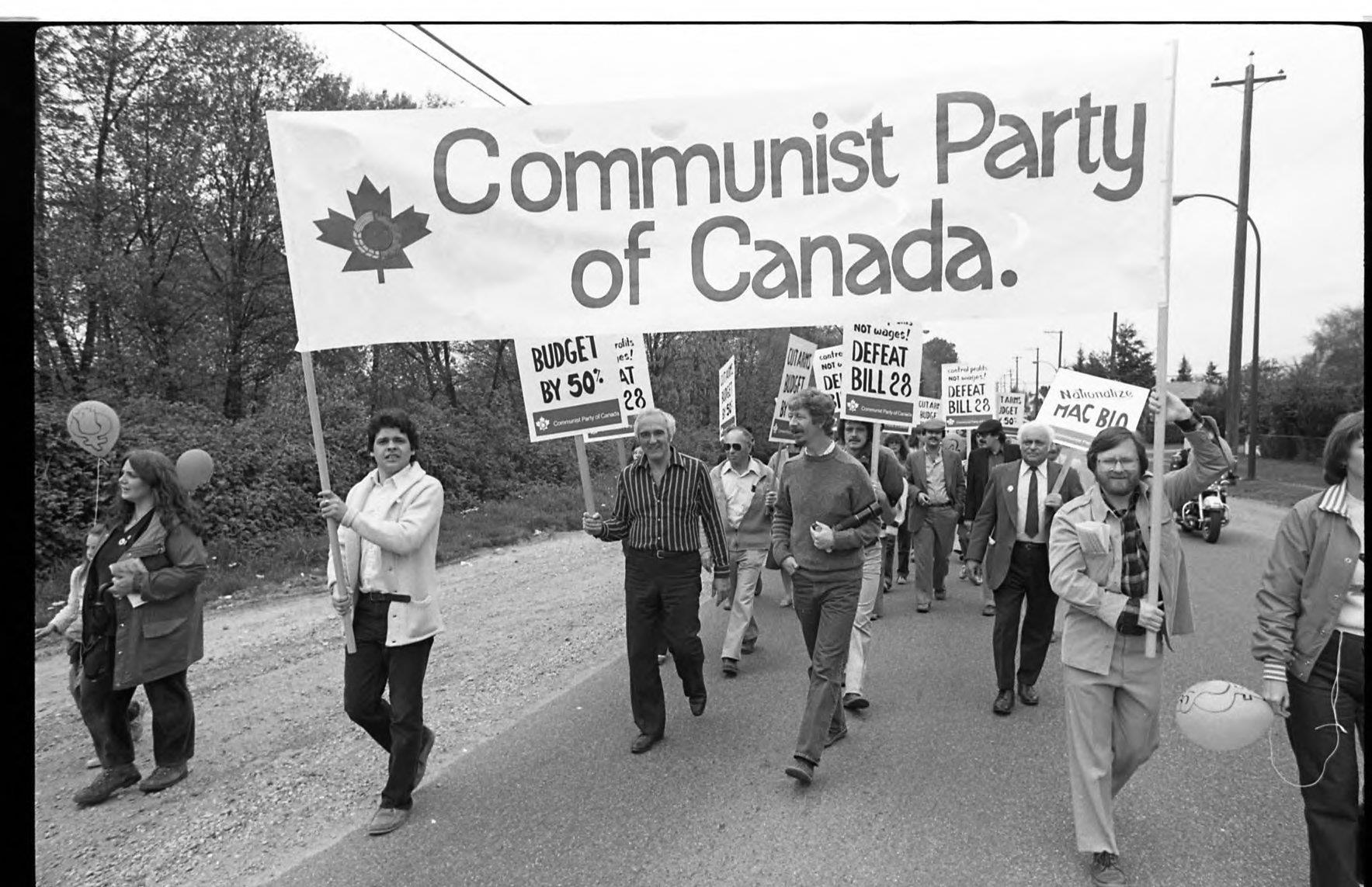
A Communist Party of Canada march in the 1970s. (Photo via Passage)
A century ago this week, left-wing activists founded the Communist Party of Canada (CPC) with a clear aim: to build a united working-class organization that was ready to fight and win. Historians have written at length about Canada’s 1919 labor revolt, but not so much about what its key participants did a few years later with the formation of the CPC. It’s a vital part of the history of the Canadian workers’ movement.
At best, historical accounts have treated the party’s foundation as a curious prelude to the establishment in 1932 of the social-democratic Co-operative Commonwealth Federation (CCF). At worst, they have dismissed the party’s existence as a sinister Moscow plot that corrupted working-class communities before healthier elements in Canadian society rooted out its influence during the Cold War.
More recent work, based on newly unearthed documents, has shown that the party’s purpose and successes stemmed directly from the lessons of 1919. The party’s founders created it to fight for working-class interests in the present and prepare for the return of mass upheaval in the future.