The Subminimum Tipped Wage for Restaurant Workers Guarantees On-the-Job Harassment
A recent survey of restaurant workers confirms what insiders know: that the industry has the highest rate of sexual harassment, and a reliance on tips exacerbates the problem. Eliminating the tipped wage would go a long way to fixing the problem.
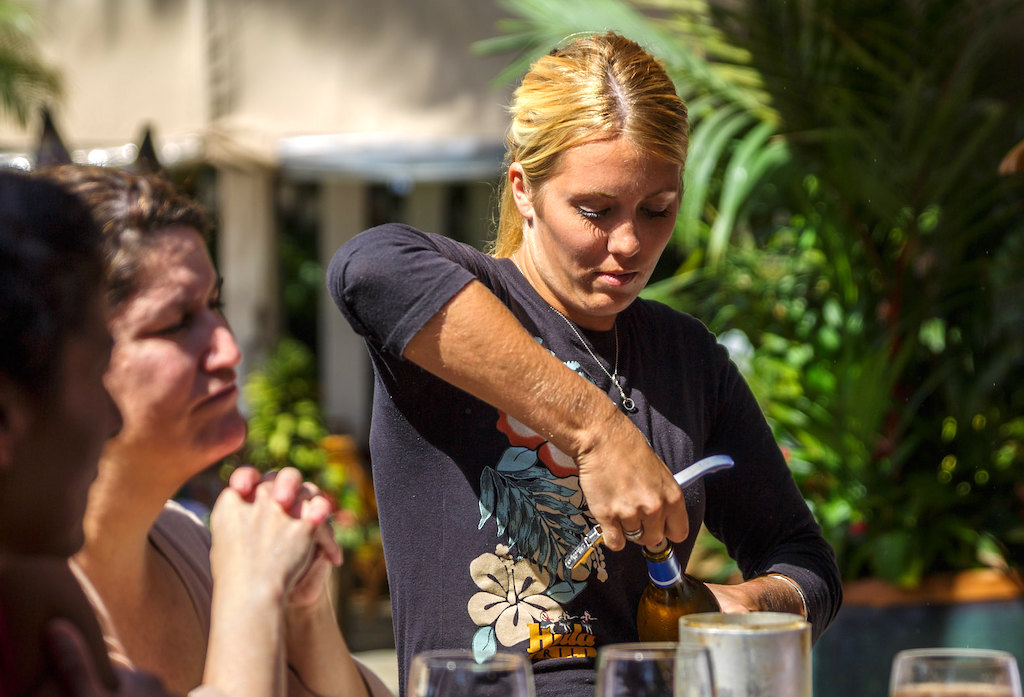
According to a recently published report, tipped workers were significantly more likely to have been sexually harassed than their non-tipped counterparts. (Flickr)
During my first shift as a server, when I was in high school, a customer left his number in the space on the receipt reserved for the tip.
I’ve always thought of this incident as my very efficient introduction to the world of work. In the years since, food service jobs presented me with many similar such incidents. There was the time my manager told me to hide from a regular who always followed me out of work, rather than confront him. There was the time I quit my hostessing job: a bartender was getting increasingly aggressive with his harassment and when I brought it up to management, my boss said I had been hired because of my appearance, as if this was all that needed to be said about the situation.
A new report confirms that mine was the typical, rather than exceptional, experience of restaurant work. “The Tipping Point: How the Subminimum Wage Keeps Incomes Low and Harassment High,” a project of One Fair Wage, a nonprofit that advocates for an end to the subminimum wage for tipped workers, and the UC Berkeley Labor Research Center, details the extent of the problem, drawing on a nationally representative survey, conducted by Social Science Research Solutions in January 2021.