“Generous” Billionaires Are Part of the Problem
Modern-day elite philanthropy serves the same purpose as it did in the days of the robber barons: reinforcing the power of the rich.
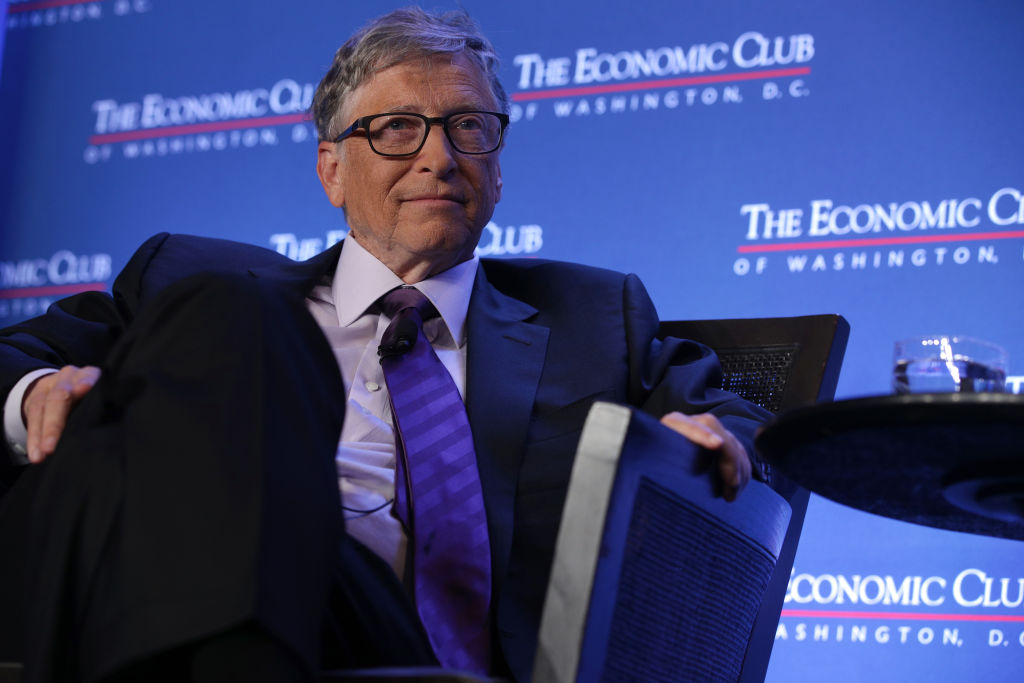
Bill Gates participates in a discussion at the Economic Club of Washington in 2019. (Alex Wong/Getty Images)
In 2018, the richest man in human history donated roughly 0.1 percent of his wealth to charity. Warren Buffett and Bill Gates, meanwhile, proved in a more giving mood, donating 3.9 percent and 2.6 percent, respectively, to charitable causes. For most other billionaires in the top twenty as ranked by net wealth, the figure was typically somewhere between 0.1% and 0.3% — which is not exactly “generous” as most of us understand it. Generosity, by definition, must involve a degree of sacrifice, and what, exactly, is a person worth billions giving up by shelling out a hundred million or so in support of a voluntarily chosen cause?
Not much — and, in fact, the question should really be inverted, because the enterprise of big philanthropy ultimately benefits the wealthy a great deal. Though this news is something less than earth shattering, a newly published review of scholarship surrounding elite giving in the United States and UK makes the case with particular force. Jointly authored by four academics based at different universities in Britain, “Elite philanthropy in the United States and United Kingdom in the new age of inequalities” both lends weight to the existing critiques of big philanthropy and offers some useful theoretical foundations for critics moving forward.
The authors begin by noting the flourishing of philanthropy and charitable societies during the first great period of inequality in the capitalist era — which extended from the mid-nineteenth century until early in the twentieth. “Then, as now,” they write,