Amazon Workers’ Likely Defeat in Alabama Shows Exactly Why We Need to Pass the PRO Act
The reason Amazon workers lost in Alabama is simple: Employers in the US are allowed to engage in brazen anti-union tactics throughout union elections. The PRO Act would change all of that, finally freeing workers from employer intimidation.
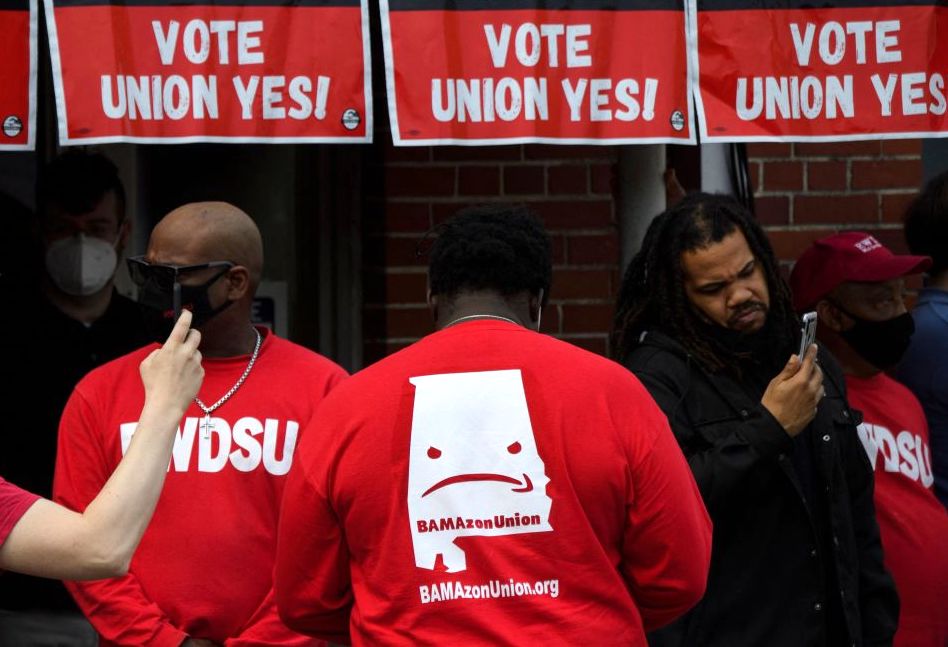
Organizers wear shirts in support of the Amazon union drive outside the RWDSU office in Birmingham, Alabama. (Patrick T. Fallon / AFP via Getty Images)
The only thing less surprising than a union losing a big election for representation right in the Deep South is that the loss generated a firestorm of takes. Smart thinkers on the Left like Nelson Lichtenstein, Jane McAlevey, John Logan, and Rich Yeselson have already weighed in with their thoughts, and many more discussions are taking place online and offline regarding what went wrong in the Retail, Wholesale and Department Store Union (RWDSU)’s loss last week in the National Labor Relations Board (NLRB)–conducted election at Amazon’s facility in Bessemer, Alabama. The mood is understandably somber in assessing the fallout, but it’s also surprisingly bitter for a campaign that was a long shot from the moment it was unexpectedly revealed to the world late last November.
All parties acknowledge that the RWDSU faced both enormous structural disadvantages inherent in any organizing drive under the National Labor Relations Act, and the unique challenges of attempting to unionize the country’s most powerful open shop, which wields unlimited resources and unmatched surveillance capabilities. But many of the postmortems of the election dive deep into criticisms of the union’s organizing strategy.
McAlevey, for example, takes the union to task on multiple fronts, including for supposedly being surprised at Amazon’s successful quadrupling of the bargaining unit in NLRB proceedings, for declining to conduct house visits of eligible voters, and for failing to prioritize outward displays of union support on the shop floor. Yeselson adds that the union foolishly proceeded to the election without enjoying supermajority support in the inflated unit, leaving organizers scrambling to build momentum when campaigns should be busy inoculating those workers against the inevitable anti-union campaign.