“The PRO Act Could Give Us the Ability to Collectively Bargain”
Rideshare drivers across California rallied in support of the PRO Act, a major labor law reform bill that could transform working conditions for gig workers. We spoke with one of the organizers about how Proposition 22 misled drivers, why gig workers need collective-bargaining rights, and the difficulties of organizing these workers.
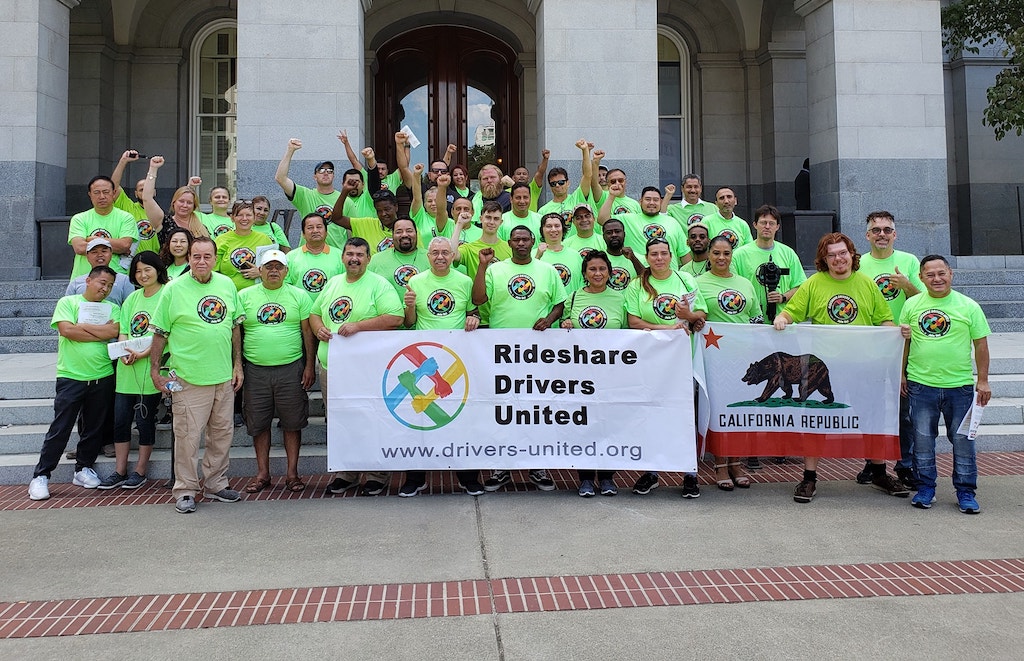
Members of Rideshare Drivers United gather in California in November, 2020. (Rideshare Drivers United / Facebook)
Members of Rideshare Drivers United (RDU), an independent organization of rideshare drivers in California, rallied Tuesday in support of the PRO Act, an ambitious labor law reform bill that recently passed the House of Representatives and is now on its way to the Senate.
The bill would grant gig workers like RDU’s membership the right to collectively bargain, even if their employers continue to refuse to grant them employee status. In California, the issue is particularly pressing: gig economy companies spent over $200 million to pass Proposition 22, a bill they themselves wrote, to retain absolute control over their workforce. The effects are already being felt, both among gig workers and more traditional employees.
The rallies, held in downtown Los Angeles at the California State Building, at Uber headquarters in San Francisco, and in San Diego at the San Diego State Building, were called to protest Uber and Lyft, which have “stolen from the public coffers by misclassifying their drivers and shirking taxes meant to provide a safety net for workers like app-based drivers, especially during a pandemic,” as the RDU statement put it.