The Utopian Promise of Self-Checkout Machines
Under capitalism, automation destroys jobs. In a socialist society, it could free us from work and offer untold leisure to all.
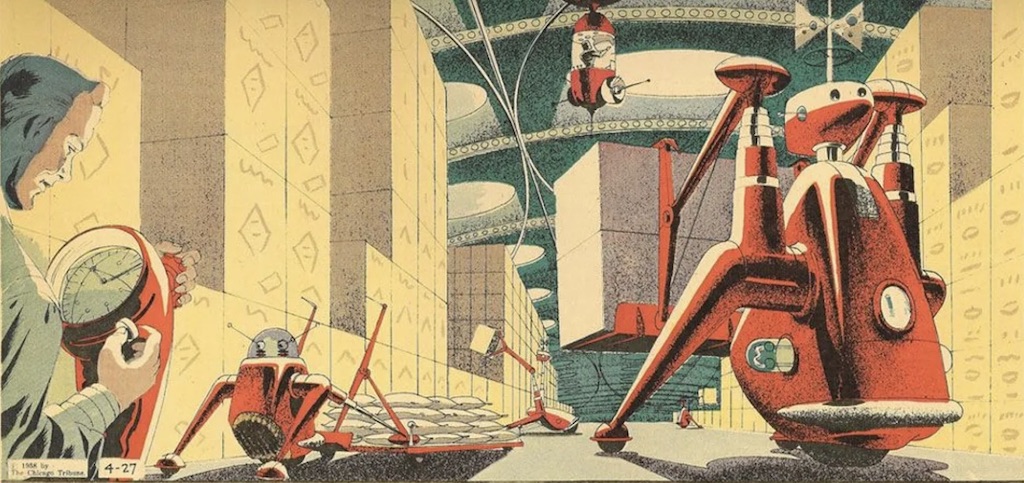
A futurist vision of automated warehouses from cartoonist Arthur Radebaugh’s comic strip Closer Than We Think.
In the early twentieth century, French artist Jean-Marc Côté and a number of collaborators produced a collection of images meant to depict the year 2000 as they imagined it. Because of financial difficulties, the En L’An 2000 series was never actually distributed, only coming to light thanks to its publication by science fiction writer Isaac Asimov in the 1980s. Though you might not exactly call it utopian (the future, as imagined by Côté and his associates, still seems to include war) a theme that still runs throughout is the emancipatory potential of technology — not only to make daily life more efficient and convenient but to free people from the grind of having to perform laborious tasks.
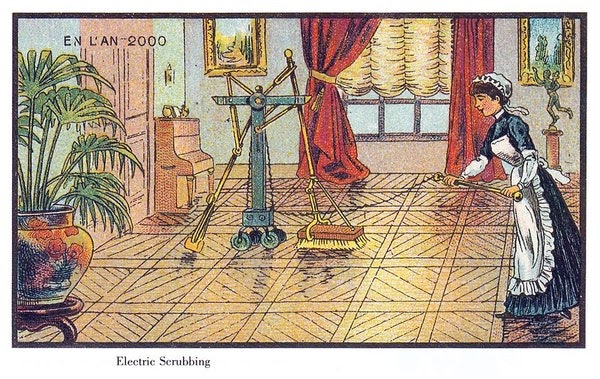
In Electric Scrubbing, a robot sweeps and polishes a floor while a maid looks on. In The New-Fangled Barber, patrons sit in relaxed poses while a machine works on their heads — the hairdresser operating the entire salon from a single terminal. In A Very Busy Farmer, a farmer effortlessly manages large-scale agriculture from the comfort of his porch. Several other images depict people enjoying various states of leisure, their downtime itself made easier by the presence of technological wonders and automation.