Lelio Basso and the Missed Opportunities of Italian Socialism
Lelio Basso was a major figure of the postwar Italian left who urged its parties to follow through on their revolutionary programs and avoid subordinating themselves to the ruling Christian Democrats. Italy’s Socialists and Communists should have heeded his advice.
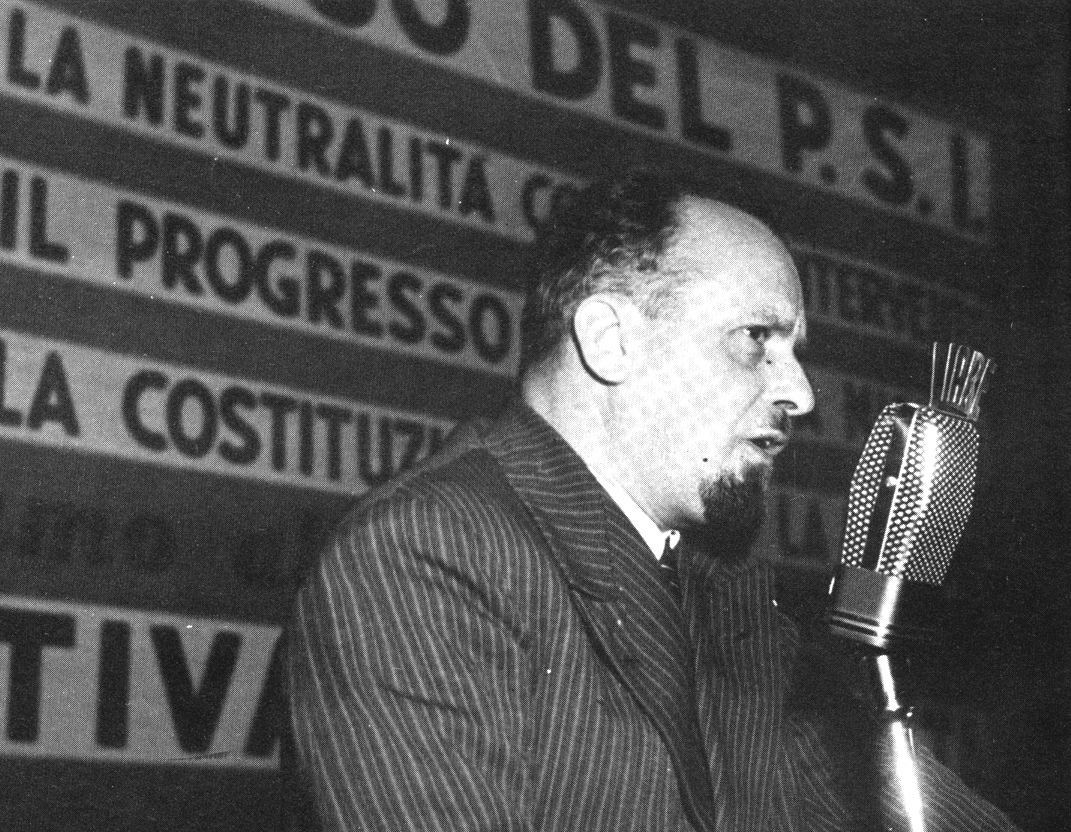
Lelio Basso in Milan, Italy in 1953. (Wikimedia Commons)
The Italian Marxist thinker Lelio Basso always sought to bridge the gap between theory and practice, a goal that is often aspired to and rarely achieved. Basso was a key figure in Italy’s wartime anti-fascist resistance and in the creation of the postwar Italian Republic. During the Cold War, he tried to steer a path between the two dominant ideological trends of the European left: reformist, pro-American social democracy and orthodox, pro-Soviet communism.
Rosa Luxemburg was a crucial reference point for Basso, and he worked tirelessly to promote her political thought. He sought to advance his distinctive understanding of socialism through the Italian Socialist Party (PSI), the second party of the Italian workers’ movement during the postwar decades, operating in the shadow of its Communist rival. Basso later broke with the Socialists because of their drift to the right in a governing alliance with Italy’s Christian Democrats.
There are many facets of Basso’s approach that are highly relevant to the politics of our own time, from his humanistic view of socialism to his emphasis on democracy and his internationalist work with the Russell Tribunals that documented US atrocities in Vietnam. He is a figure who deserves to be better known in the Anglophone world, and the publication for the first time in English of Basso’s translated essays is an excellent opportunity for a closer look at his legacy.