American Workers Aren’t Striking
Strikes are the labor movement's muscle, and when unions don't strike, that muscle atrophies. Unfortunately, the latest data shows just how atrophied that muscle is. Simply put, workers aren't striking.
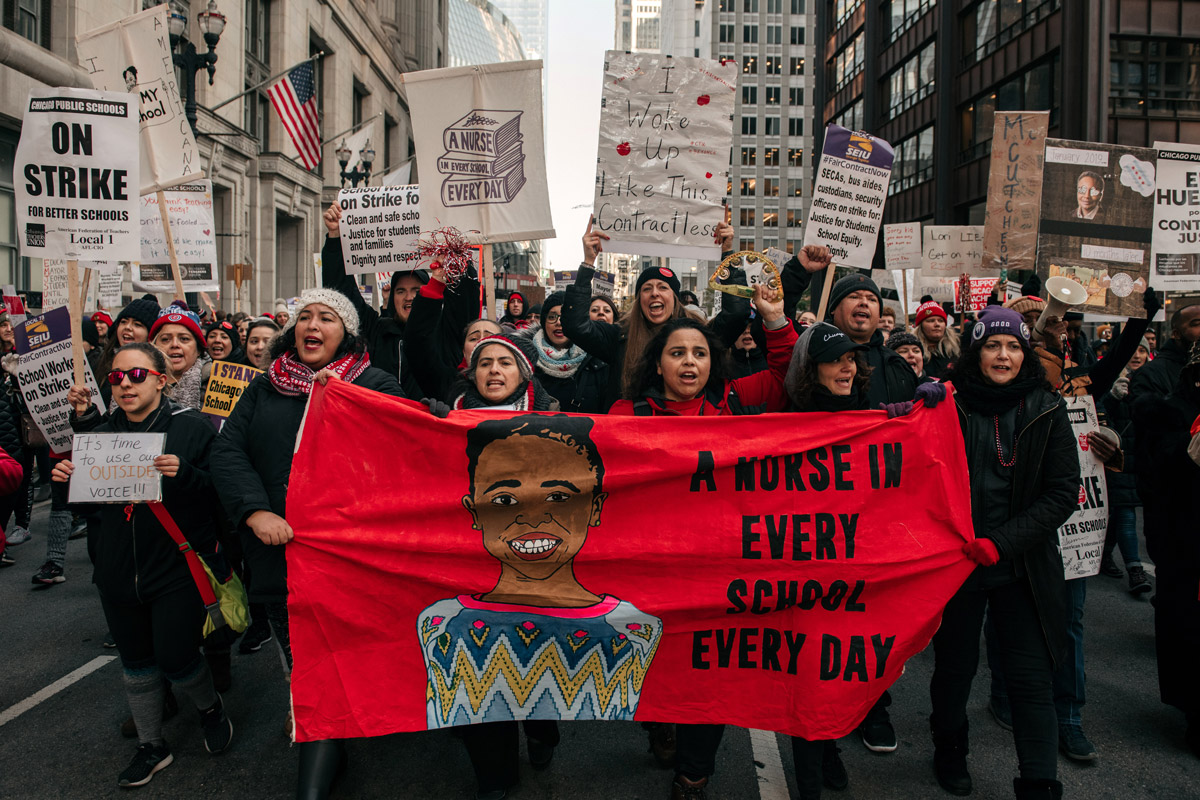
Thousands of demonstrators take to the streets in support for the teachers’ strike, on October 23, 2019, in Chicago, Illinois. (Scott Heins / Getty Images)
Although there have been plenty of reports of rising labor militancy in the United States — teachers’ strikes, tech and delivery app organizing — it’s sadly not showing up in the strike data.
In its annual release, the Bureau of Labor Statistics (BLS) reports that there were just seven major “work stoppages” (which include lockouts as well as strikes) in 2020, tied with 2017 for the second-lowest number since 1947, and beaten only by 2009’s five. What strike action there was, says the BLS, was mainly against state and local government employers (five of them), not private ones (two).
Here’s a graph of the grim trajectory. Over the period shown, total employment has tripled, meaning that the collective power of these strikes is a fraction of what it once was. If you adjust for employment growth, last year’s seven would have been just over two by 1950’s standard. That year, there were over four hundred strikes.