The Labor Feminism of 9to5 Should Guide Our Organizing Today
For today’s feminists, labor militants, and socialists, the vision of feminist labor organizing that guided the women’s white-collar organizing project 9to5 — and immortalized in the classic comedy 9 to 5 starring Jane Fonda, Lily Tomlin, and Dolly Parton — should still be our north star.
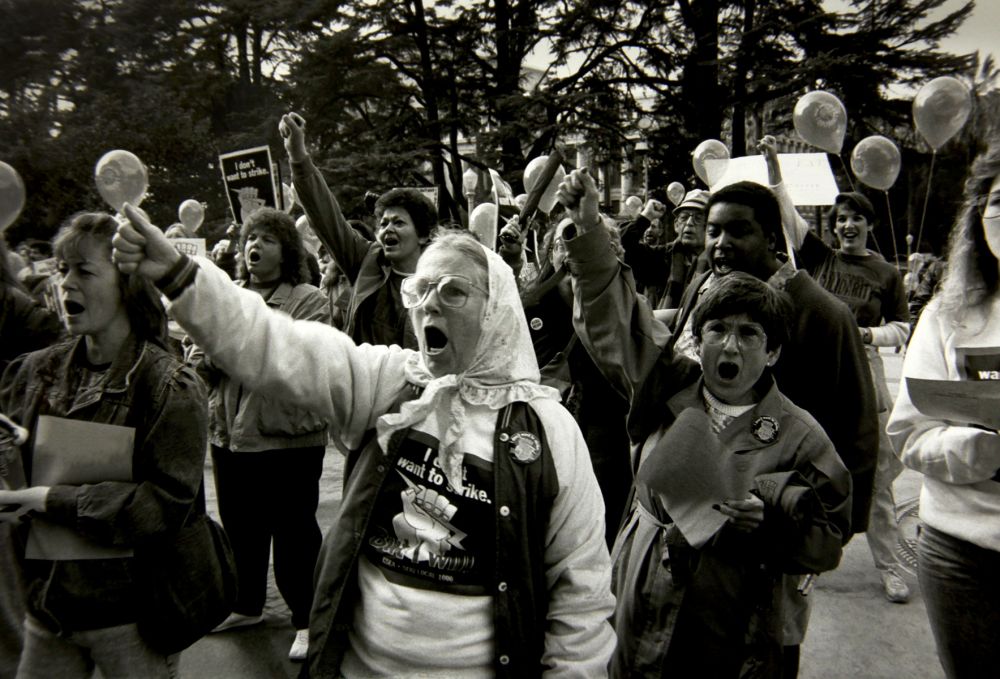
Archival footage of women from the 9to5 Movement striking in the 1970s from the documentary 9to5: The Story of a Movement.
It’s hard to imagine, but the zany 1980 fantasy-comedy film 9 to 5, starring Dolly Parton, Jane Fonda, and Lily Tomlin, was initially going to be a drama. When Fonda took on the project of making a movie about the exploitation, harassment, abuse, and mistreatment women suffered in the workplace, she approached it with all the seriousness she thought the topic called for.
Fonda had been friends with Boston clerical worker and labor leader Karen Nussbaum for years, having met in the anti–Vietnam War movement, and Nussbaum kept her abreast of the state of things for women workers. It was dire: women faced rampant sexism in the office, were regularly passed over for job opportunities in favor of less-qualified male counterparts, often made half of men’s salaries, and had little to no protections at work.
In response, Nussbaum, along with fellow Harvard office worker Ellen Cassedy, founded a Boston-based organization called 9to5 in 1972. Growing out of a local newsletter titled 9to5: Newsletter for Boston Area Office Workers, 9to5 brought women office workers together to organize for better conditions at work. They built a new model of organizing, somewhere between the labor and women’s movements, harnessing the energy behind rising feminist struggles while also recognizing that women organizing as workers was essential and powerful.