Breaking New York’s Cycle of Austerity
Since the fiscal crisis of 1975, New York has been repeatedly lashed by austerity. Now, with the latest round of post–COVID-19 cuts on the horizon, a group of socialist legislators and movement organizations are spearheading a fight to fund public services through a campaign to tax the rich.
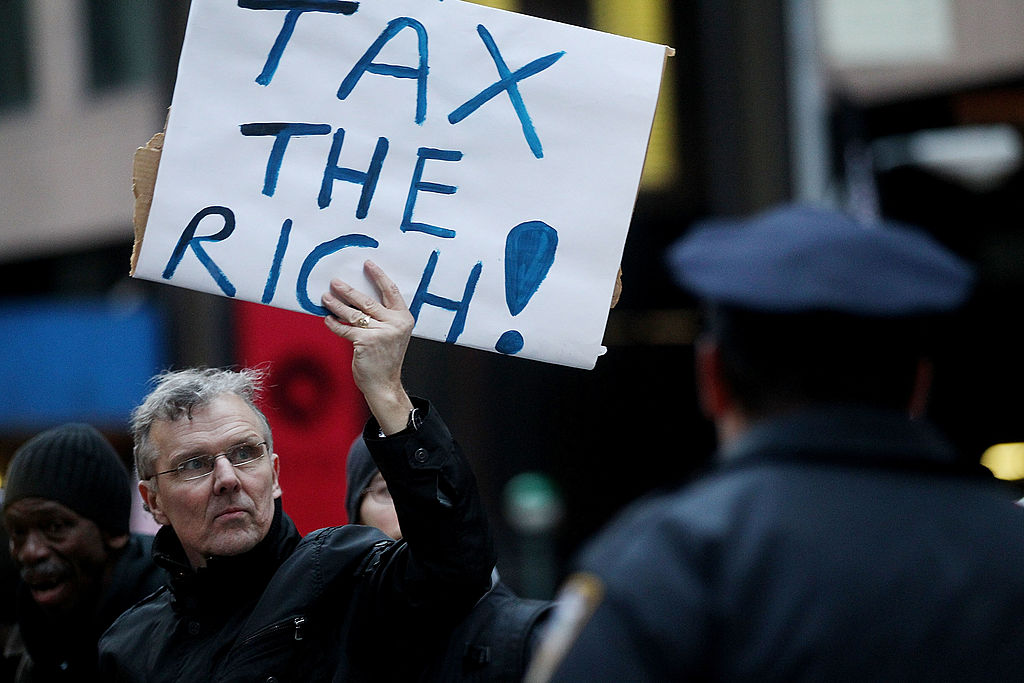
A protester holds a “Tax the Rich” sign as he marches during a rally held by union supporters. (Mario Tama / Getty Images)
When Margaret Thatcher infamously declared “There Is No Alternative” to neoliberal capitalism in the early 1980s, she was giving name to a process of ruling class onslaught that had been underway since the early 1970s. This global project of capitalist class power sought to undermine, defund, and dismantle the institutions of social democracy, the concessions that working-class parties, movements, and unions had wrung from the bosses during the high tides of mid-century class struggle. In many respects, New York City and New York State were laboratories of this capitalist clawback.
New York City’s municipal budget free fall of 1975 produced an acute crisis, during which a coalition of Wall Street bankers, real estate bigwigs, and politicians — abetted by much of the city’s Democratic-aligned labor bureaucracy — proceeded to gut the city’s public institutions and enacted a regime of permanent austerity that in many respects still continues today.
From public hospitals to education, transportation to housing, real estate to pension funds, the fiscal crisis of 1975 and its aftermath reshaped daily life for millions of working-class New Yorkers who rely on these public institutions. But perhaps even more significantly, this crisis represented a long-term structural shift in the balance of class power in the city away from the organized working class and in favor of real estate and finance capital.