Michigan’s Forgotten Christmas Eve Massacre
On Christmas Eve in 1913, a pitched battle between organized labor and the mining barons of northern Michigan climaxed in the gruesome deaths of over 70 union supporters and their children. The 1913 Massacre struck a debilitating blow to the region’s labor movement and changed the Upper Peninsula forever. But it’s been largely forgotten in popular consciousness.
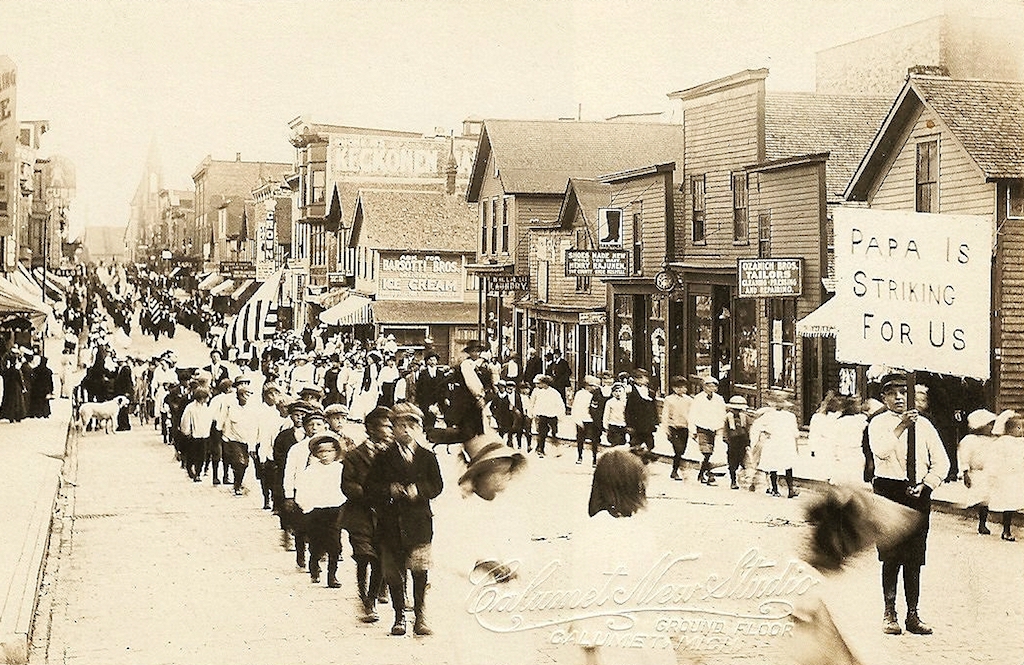
Children of Copper County miners marching in support of the strike in Calumet, Michigan, 1913. (Wystan / Flickr)
Michigan’s Upper Peninsula and the Finnish immigrants whose descendants still make up the plurality of its inhabitants aren’t the first things that come to mind when thinking about American labor history – or anything else, for that matter.
The “UP” occupies a marginal position in the national imagination. Sandwiched between three different Great Lakes, it covers one-third of the state’s landmass but boasts only 3 percent of its population. Its largest city, Marquette, has just twenty thousand residents. Cartographers sometimes mistakenly depict the peninsula as part of Wisconsin — or leave it off the map entirely.
One of the rustier segments of the Rust Belt, the Upper Peninsula has struggled to provide its residents with decent jobs ever since mining and manufacturing dwindled after World War II. Its main industries are now tourism and lumber, and the lure of more opportunities “downstate” prompts many young people to leave the region. Mirroring most of rural America, the UP also tends to be solidly Republican — fourteen of its fifteen counties went for Trump in 2016 and 2020.