Hugh Keays-Byrne Showed Us the Danger of Demagoguery and the Promise of Solidarity
The Mad Max veteran villain actor Hugh Keays-Byrne died last week. His performances took us to the demonic dark side of politics and showed that if we dare to struggle, we dare to win.
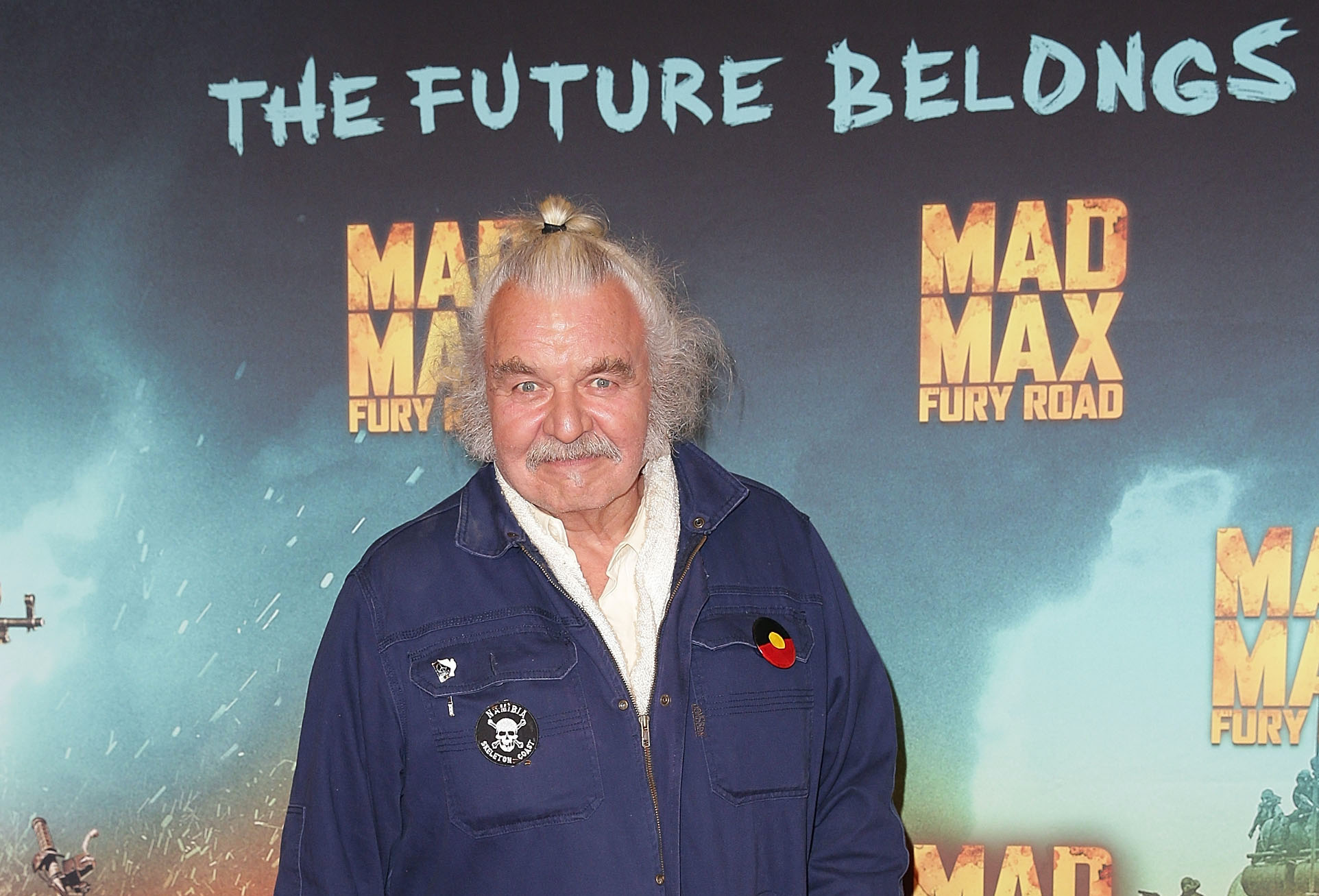
Hugh Keays-Byrne arrives at the Australian premiere of Mad Max: Fury Road on May 13, 2015 in Sydney, Australia. (Mark Metcalfe / Getty Images)
Acclaimed actor Hugh Keays-Byrne died this week at the age of seventy-three. Enthusiastic tributes to the kindness of a man known for his on-screen cruelty dutifully poured in. When director Brian Trenchard-Smith announced his friend’s death last Thursday, he wrote that Keays-Byrne “cared about social justice and preserving the environment long before these issues became fashionable. His life was governed by his sense of the oneness of humanity.”
Keays-Byrne was born in India, but moved to Australia in 1973 after touring there to perform. A member of the Australian actors’ union since day one, Keays-Byrne’s whole career was defined by films that explored the danger of right-wing demagoguery and the promise of solidarity politics.
Among his lesser-known roles, he played an aspirational antipodean führer in the adaptation of D. H. Lawrence’s Kangaroo, the communist leader Idris Williams in Strikebound, and a besuited company thug in Werner Herzog’s Where the Green Ants Dream. The latter enraged shrill critics at Cannes in 1984, who saw its depiction of a mining company using the legal system to steal land from Aboriginal communities as insufficiently patriotic. Keays-Byrne also directed and starred in the collective-minded sci-fi film Resistance, in which rough-as-guts working-class women team up to overthrow a military dictatorship in a dystopian future Australia.