Aaron Sorkin’s Chicago 7 Are Shockingly Sympathetic, but Lacking Radical Substance
The Trial of the Chicago 7 is surprisingly good for an Aaron Sorkin production. But the artistic liberties he takes with the historical facts, particularly around downplaying or leaving vague the protagonists’ radical politics, tell you a lot about Sorkin’s own blind spots.
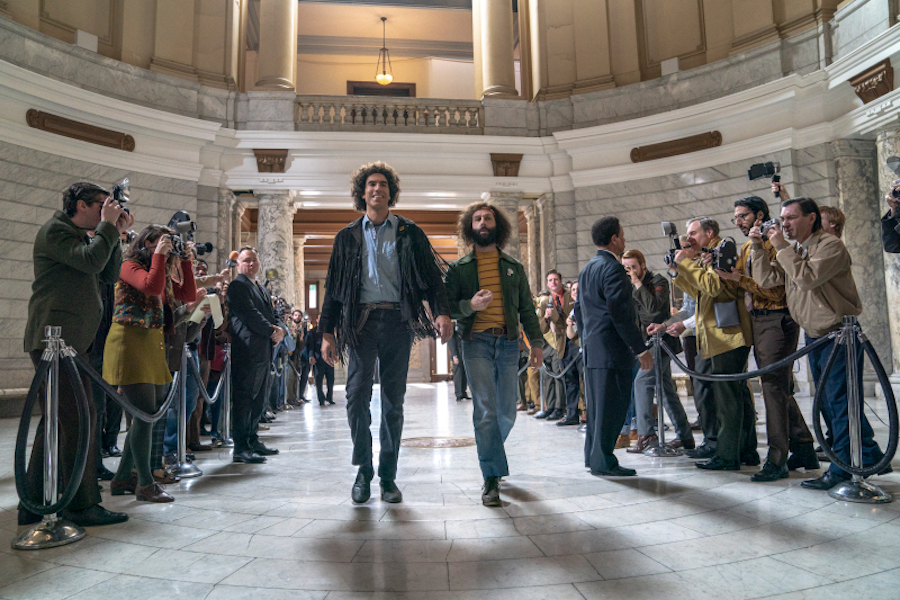
Still from The Trial of the Chicago 7, 2020 (Netflix).
Aaron Sorkin’s straight-to-Netflix movie The Trial of the Chicago 7 is better than it has any right to be.
The plot is loosely based on the trial of Abbie Hoffman, Jerry Rubin, Tom Hayden, Rennie Davis, David Dellinger, Lee Weiner, and John Froines for their role in planning the protests at the Democratic National Convention in Chicago in 1968. (Black Panther Party cofounder Bobby Seale initially made eight.) Chicago mayor Richard M. Daley’s police department used brutal police tactics that turned the initially peaceful protests into riots. Richard Nixon’s Justice Department then used the fact that Hoffman, Rubin, and the rest had crossed state lines while organizing confrontational protests as an excuse to charge them with “conspiracy” and “incitement to riot.”
Neither the seven white leftists on trial in Chicago nor Seale and his fellow Panthers are the kinds of protagonists anyone familiar with Sorkin’s work would expect him to portray sympathetically. The TV show with which he’s most associated, NBC’s long-running The West Wing, was about a centrist liberal president prone to make speeches so eloquent that they reduced both Republicans and unrealistic progressives to silence. One of the main characters, Josh Lyman, was based on Rahm Emanuel — and he was one of the good guys!