The Regina Manifesto and the Origins of Canada’s Parliamentary Socialists
Canada’s Co-operative Commonwealth Federation, forerunner of today’s New Democratic Party, may have been less militant than some of its contemporary rivals. But its founding document is a powerful call to arms — and present-day socialists could learn from its boldness.
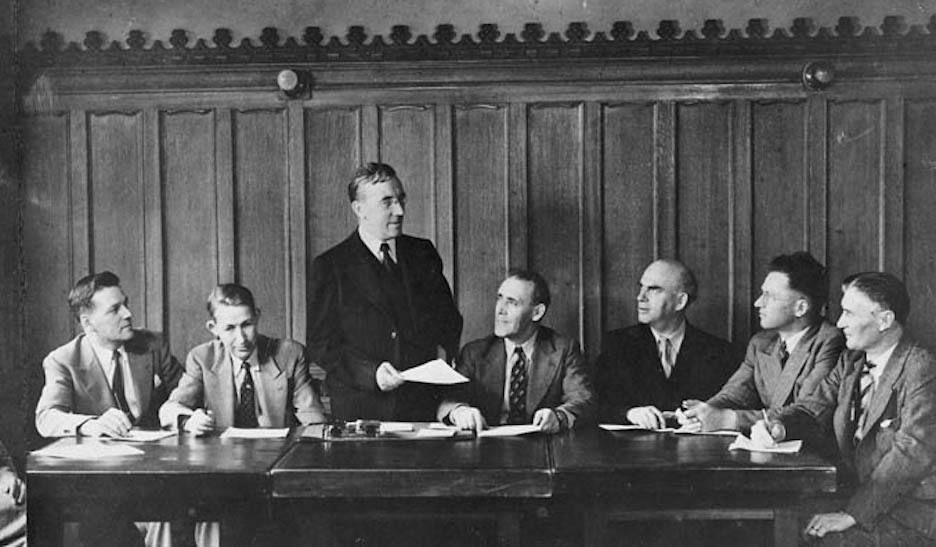
The CCF was founded in 1932 in Calgary, Alberta. (Wikimedia Commons)
The Great Depression of the 1930s laid bare the inherent injustice and inhumanity of capitalism. Breadlines and dustbowls — increasingly ubiquitous symbols of intense misery — defied explanations for social suffering that placed the blame on individuals and undermined the case against government interference in the economy. The collapse of the world economy, as historian James Naylor recently explained, “lent credence and a heightened confidence to capitalism’s strongest critics.”
In 1932, a group of women and men representing workers, farmers, academics, and religious leaders met at the Royal Canadian Legion #1 in Calgary, Alberta — now Canada’s conservative epicenter — to discuss their common experiences of exploitation. Surrounded by symbols of Canadian (really British) patriotism — the Red Ensign and a portrait of the king — they debated strategies to create a nation that would make possible “a much richer individual life for every citizen.”
For those who did not believe in revolution, the solution was obvious: the formation of an electoral party to challenge the Liberals and Conservatives — “the instruments of capitalist interests” — for political power. A socialist government, they argued, was the only way to “put an end to this capitalist domination of our political life.” The following year — the worst of the Depression in Canada — they founded the Co-operative Commonwealth Federation (CCF).