Salvador Allende’s Brief Experiment in Radical Democracy in Chile Began 50 Years Ago Today
Socialist leader Salvador Allende became Chile’s president fifty years ago today. Allende’s election inaugurated a unique experiment in radical democracy that was cut short by Augusto Pinochet’s brutal US-backed coup.
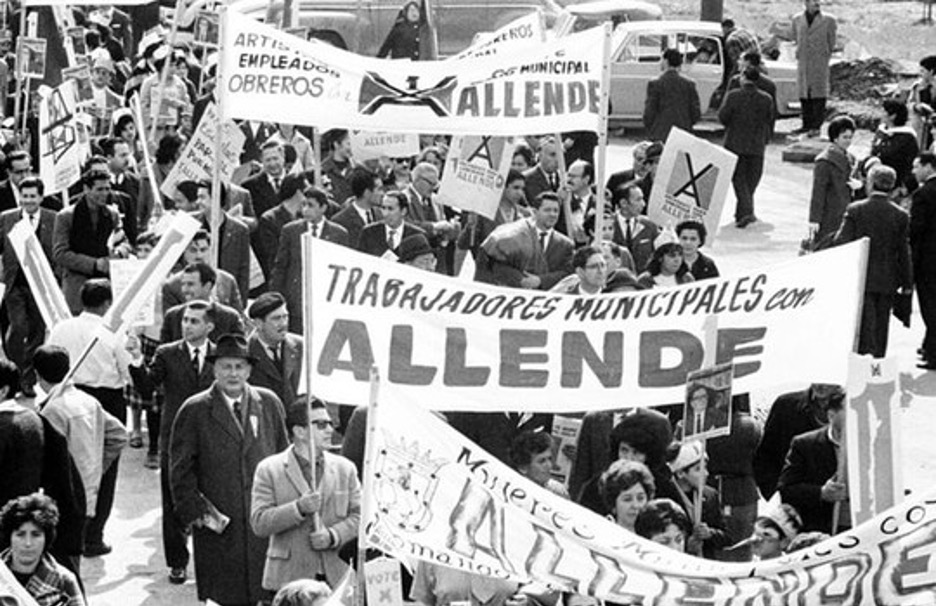
“What really changed for Chile’s revolutionary left was Allende’s election, because suddenly it opened up the possibility for effervescent grassroots social struggle.”
Fifty years ago today, Salvador Allende was elected president of Chile. His thousand days in office raised the hopes of millions in Chile, enacting policies to nationalize industries, expand education, and empower workers. It remains a much-discussed chapter not only in Latin America but among the international left.
In her book, Beyond the Vanguard: Everyday Revolutionaries in Allende’s Chile, historian Marian Schlotterbeck brings to life the spirit of “everyday” revolution that characterized the period of Allende’s government. While the Popular Unity government often preached moderation, it unleashed radical changes from the bottom up — raising the hopes of the historically oppressed that society could be remade for their benefit rather than the “Yankee imperialists” or traditional landed elite. The September 11 coup crushed those popular democratic dreams.
In the following interview — which has been condensed and edited for clarity, and first appeared on the radio show Against the Grain — Sasha Lilley speaks with Schlotterbeck about Chile’s three-year experiment with a socialism that was both top-down and bottom-up.