The Lessons We Need to Learn From Europe’s Struggle Against Fascism
The catastrophic descent of interwar Europe into fascist rule may not be repeatable in today’s world. But a different form of reactionary politics could still take shape and prove to be just as harmful.
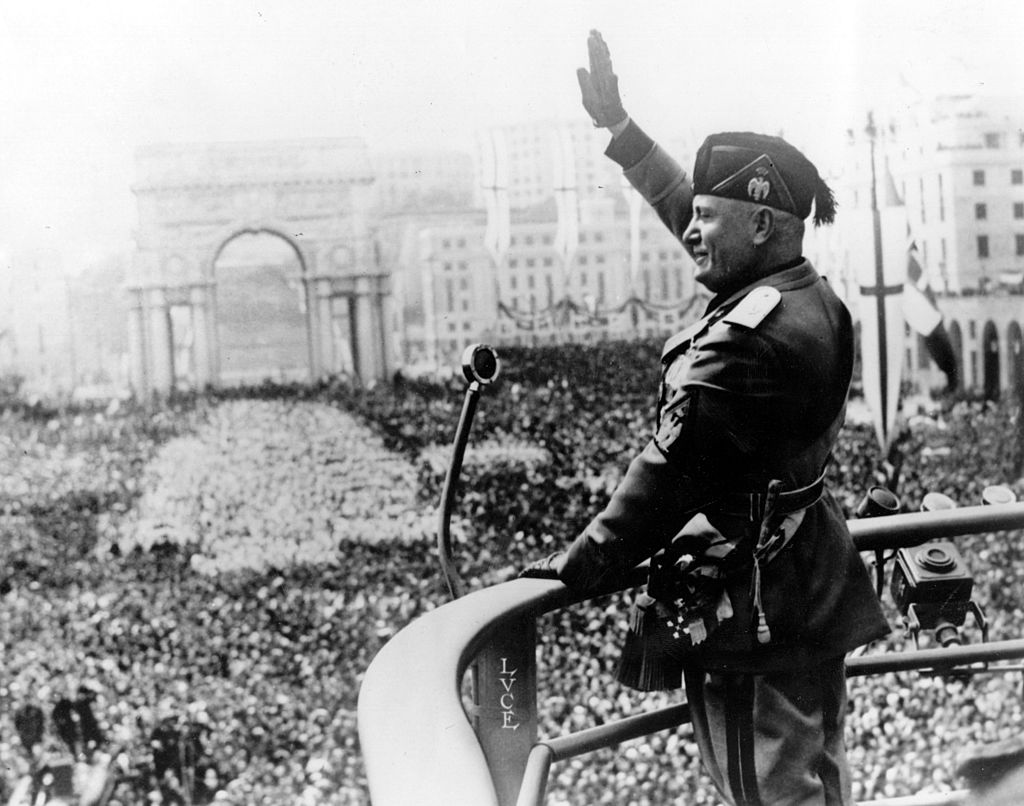
Benito Mussolini saluting during a public address. (Keystone / Getty Images)
There are countless examples in history of subversive parties being tamed once they were in government. But fascists became more radical in office. Whether you were a worker, a socialist, or one of their racial enemies, life was unmistakably different and worse in 1939 than it had been before the fascists took power in Italy in 1922 or Germany in 1933. How did fascism continue to radicalize?
Those interwar writers who accurately predicted the cruelty of fascism were overwhelmingly located on the far left of politics, among the oldest and most irreconcilable adversaries of fascism, the Italian and German Marxists. From their pamphlets, speeches, and newspaper articles, a coherent theory of fascism emerges.
Fascism, these writers argued, was not a set of ideas but a certain kind of organization and rule. Fascism should be understood not as an ideology, but as a specific form of reactionary mass movement.