Decades of Progress for Women Workers Are at Risk
This pandemic has the potential to erase much of the progress women have achieved over the past forty years. The solution is simple: labor organizing and struggling for jobs and fair pay.
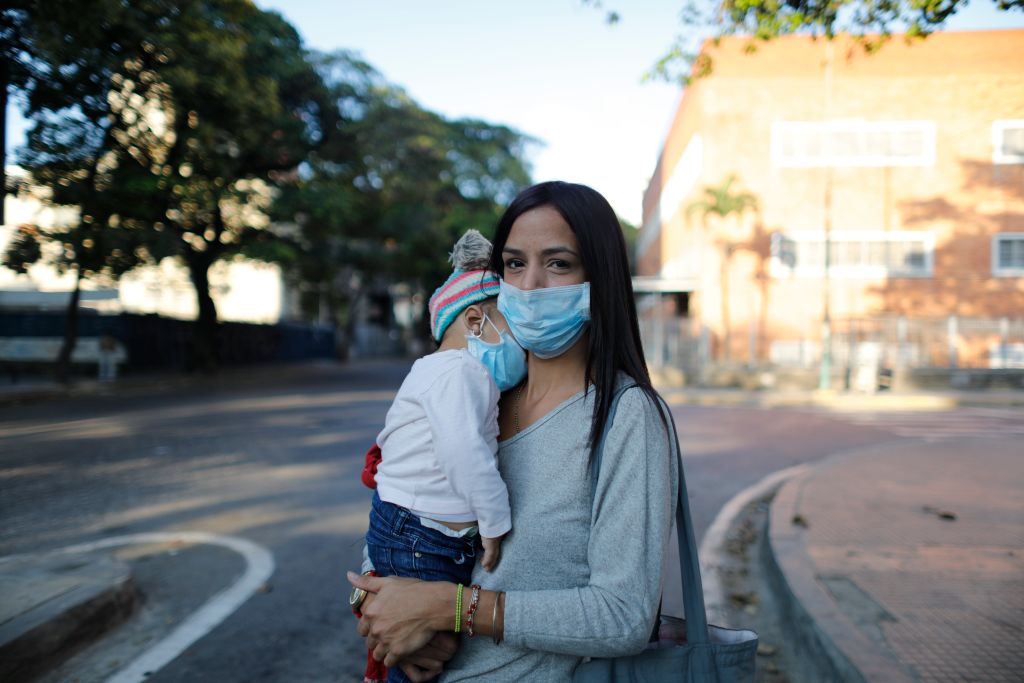
A mother and her daughter wear medical masks before going to work. (Leonardo Fernandez Viloria / Getty Images)
At the beginning of 2020 the Pew Research Council put out a sunny report on women in the workforce. It showed that after decades of struggle American women were finally making real strides in the labor market.
That was in January. In June, the research group released new data which shows that the pandemic has hit women harder than men, threatening to wipe out gains, and reveals the persistent vulnerability of millions of working women.
Before COVID-19, work life for American women as a whole was steadily improving. After entering the workforce en masse four decades ago, women in the United States — including working mothers — now make up nearly half of the adult workforce. Women’s average hourly wage increased by 45 percent between 1980 and 2018, from $15 to $22 (in 2018 dollars). This is compared to a 14 percent increase for men (from $23 to $26) over the same period.